Day 1: Friday 4 October
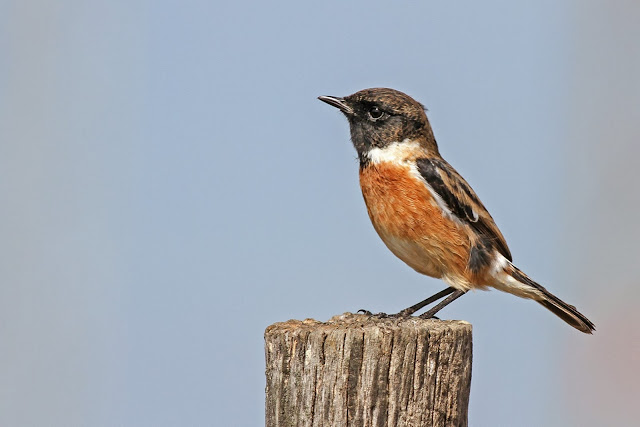 |
| Stonechat Tarabilla Comun Saxicola torquatus |
Up and down to Torre del Mar where I met up with
Steve and
Elena Powell for the start of our birding tour to the west of the region taking in Tarifa, Los lances beach and La Janda followed by La Janda, Bonanza and then the Brazo del Este on the Saturday and finally the Osuna "circuit" in Sevilla Province on the Sunday morning. In addition, we also made a stop at both the Laguna Dulce and Fuente de Piedra on the drive back to lake Vinuela. Perfect weather with hardly a breeze over the three days and clear blue skies on the first day (if anything a little too hot on the Saturday!) plus a sunny but becoming cloudy Sunday. The weather forecast had been very accurate.
+%5BDesktop+Resolution%5D.jpg) |
| A very high Short-toed Eagle Culubrera Europea Circaetus gallicus |
Approaching Algeciras we had already seen
Kestrel,
White Stork and both common dove so it was straight up to the
El Algorrobo raptor viewpoint with blue skies, no wind at 10.30 and the hope of something spectacular. Unfortunately, we seemed to have picked on something of a "quiet day" with relatively few birds passing through and those that did were, on the whole, very high. Thank goodness we had both
Crested Lark and
Blackcap as we entered the site. There were a number of
Barn Swallows but then the first raptors, mainly
Griffin Vultures but also
Short-toed Eagles, the occasional late
Honey Buzzard and a couple of
Booted Eagles. Meanwhile, a
Sardinian Warbler was playing around in the nearby bushes along with a
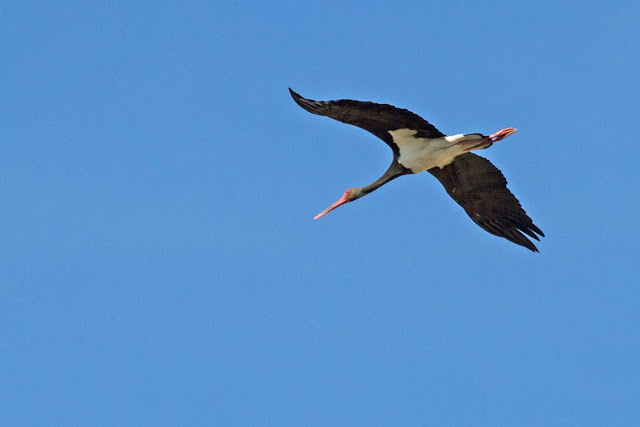
Pied Flycatcher. Finally, a small flock of Black Storks passed over and we decided to move across to the other side of the sierra and check out the
Cazalla viewpoint. Not much better here and we were also more exposed to the slight breeze. However, we did pick up more
Griffins and
Short-toed Eagles plus a
Sparrowhawk and the first of the many
Common Kestrels that were to be seen in the three days. In addition, we arrived in time for a hirundine movement which consisted of mainly
House Martins and a few
Barn Swallows but also at least a handful of
Red-rumped Swallows. A single and late
Alpine Swift was recorded and then much time was spent photographing a very obliging
Willow Warbler that was busily fattening itself up for the crossing over to Africa.
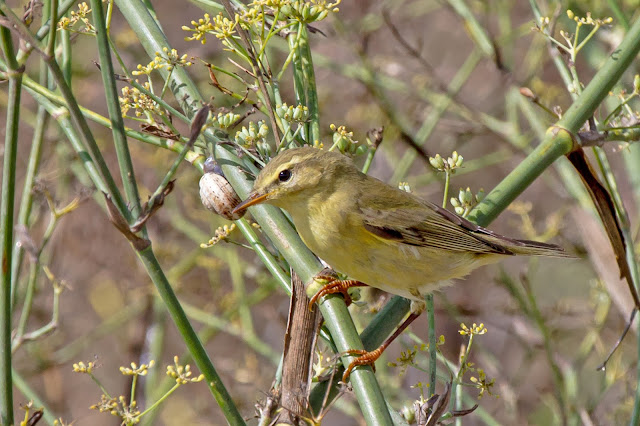 |
| Willow Warbler Mosquitero Musical Phylloscopus trochilus |
Time to move on so first a stop at the
Los Lances beach where the tide was very much out and, with such little breeze, no wind-surfers to obstruct the birding.
Little Egrets and
Grey Herons were quickly spotted along with a score or more of
Sandwich Terns resting on the posts in the shallow water in to the right. The field approaching the hide was full of
Yellow Wagtails, mainly of the
Flava iberiae (Blue-headed) sub-species abut also a few
Flava flavisima, presumably on their way back from Britain. Also seen were
Norther Wheatear and
Stonechats. On the water on sand banks themselves were a number of
Black-headed Gulls and also many
Audouin's Gulls along with a single juvenile
Flamingo (possibly the same bird that was present two weeks ago during the ABS visit to the area). A single
Grey Plover wandered the edges and we also saw
Sanderling,
Ringed Plover, a
Ruff and a small number of
Black-tailed Godwits. Returning to the car we had a couple of
Zitting Cisticolas on the track along with
Stonechats,
House Sparrows and
Spotless Starlings.
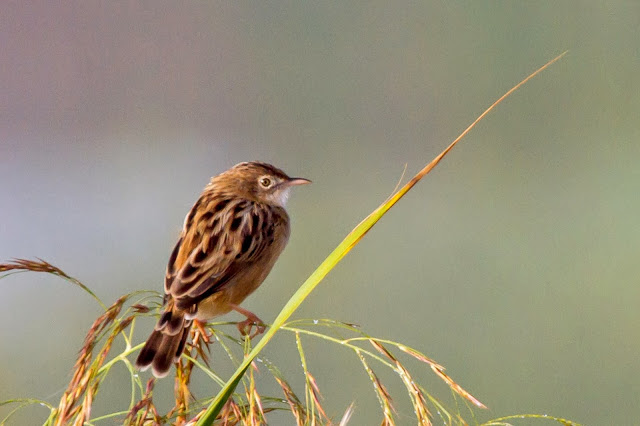 |
| Zitting Cisticola Buitron Cisticola juncidis |
Our final site for the day before retuning to the area for our first overnight stop was
La Janda. Very little to be seen until we reached the canal and then it was much too quiet until we reached the large "pond" on the bend opposite the bridge over the canal. Yes, we had recorded a number of both
Cattle and
Little Egrets, plus
White Storks and
Grey Herons but, until this point, no raptors other than a single
Common Kestrel. We even had a solitary
Cormorant take off from the drainage channel next to the rice fields. However, the pond turned up trumps with over 150
Glossy Ibis, many
Black-winged Stilts, a number of
Coot and about a dozen
Shoveler. A
Cetti's Warbler was happily singing away below us. Over the water and nearby rice fields we finally found our raptors with a quartet of quartering
Marsh Harriers, more
Common Kestrels and three
Lesser Kestrels. Behind us the track, field and trees were packed with
Wood Pigeons, probably totalling between two and three thousand individuals. A
Peregrine Falcon lifting off from one of the irrigation bars put most into the sky and then we had the wheeling spectacle above and around us that one comes to expect with pre-roosting Starlings or moving Knot flocks on the British east coast.
Jackdaws were on the pylons, and scores more were to be seen at the "smelly farm", along with numerous small charms of
Goldfinches. Just as we set off towards the smelly farm we had an immature
Golden Eagle pass over and then we were amongst the
Red-legged Partridge and a single
Pheasant.
 |
| Part of the flock of over 200 Glossy Ibis Morito Comun Ciconia nigra in La Janda |

Rather than make a return drive to the pool, we continued on towards
Benalup and had a lovely view of a
Whinchat not far beyond the farm but would the little rascal pose long enough for a photograph? of course it would not. But we did see a couple of
Buzzards and then, at the roadside river where the water level was higher than we had expected, a single
Green Sandpiper followed by a quartet of
Snipe. Leaving Benlup we arrived at the main road near Vejer de Frontera so decided to call in at the local golf course where we not only saw our second
Hoopoe and first
Chaffinches but also found a handful of
Bald Ibis, every individual covered, as Steve would say, in bling of an assortment of varying materials and colours.
 |
| Bald Ibis Ibis Eremita Geronticus eremita complete with an assortment of identification rings |
Travelling via Barbate, where the tide was almost full in, restricted waders to a few
Sanderling and
Ringed Plovers whilst a
Corn Bunting on the journey back to the hotel and a single male
Blackbird as we arrived seemed to have concluded our birding for the day - but this was not to be! Sitting outside to enjoy our evening meal, about 9pm, Elena notice the large dark birding flying around behind me followed by Steve who also saw it take for the nearby trees but the wretched
Red-necked Nightjar refused to return so that I, too, might have a look at this magnificent bird. Which ever way you look at it this was a tremendous way to finish day with a total of
62 species recorded.
Day 2: Saturday 5 October
A misty start as we made our way westwards and, as we were away by 9 o'clock, decided we would make a non-stop drive along the main track at
La Janda in case anything should be about at this earlier hour. What we had not bargained for was the low-lying mist. We may have had our first
Buzzard and a couple of
Blackbirds early on but La Janda looked as if it might be somewhat of a washout. Yes, there were lots of
Zitting Cisticolas,
Stonechats and
Corn Buntings as we made our way down the track to the canal but then nothing with no view over the neighbouring rice fields.
White Storks,
Cattle and
Little Egrets were seen plus the occasional
Grey Heron but, to date, only the sight of a
Tree Sparrow amongst the small flock of
House Sparrows on the entry track had made the journey seem worthwhile.
Cetti's Warblers were calling from the track-side vegetation and we also had numerous
Goldfinches,
Spotless Starlings, a continuous supply of
Crested Larks and a couple of
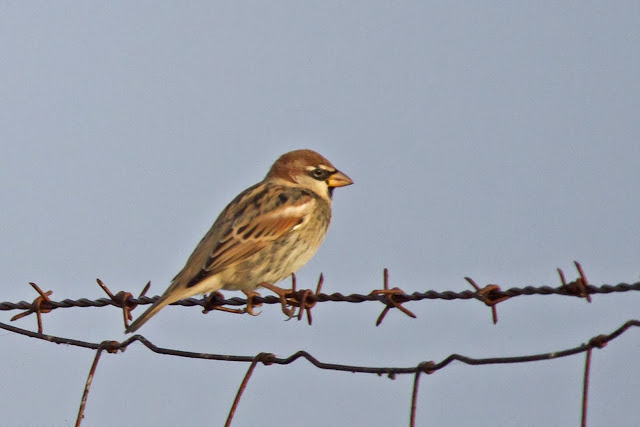
Jackdaws but we were almost at the "pond", as described yesterday, before we got our first real thrill of the morning. What seemed to be scores, if not an hundred plus,
House Sparrows flitting around the side of the track turned out to be almost exclusively
Spanish Sparrows.
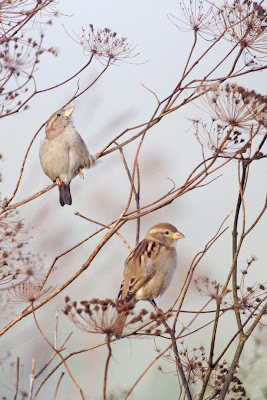 |
| Spanish Sparrows Gorrion Moruno Passer hispaniolensis in the early morning mist at La Janda |
At the pond fewer
Glossy Ibis but still good numbers of
Mallard,
Shoveler,
Coot and
Black-winged Stilts along with a pair of
Teal. The
Marsh Harriers were mainly resting in the rice fields but there were more
Grey Herons to be seen along with the
Cattle and
Little Egrets. What made this detour all the more worthwhile was the sight of a trio of
Black-shouldered Kites that had, presumably, been roosting in a nearby tree on the opposite side of the track.
Leaving La Janda we drove straight over to the Salinas of
Bonanza on the eastern bank of the Guadalquivir, recording numerous
Flamingos and a single
Magpie as we made our way round the outskirts of Cadiz itself as we headed over towards Jerez. Arriving at the working salinas where the salt was stacked in huge deposits, we first noted the small number of
Ringed Plovers, lots of resting
Little Egrets and then a single
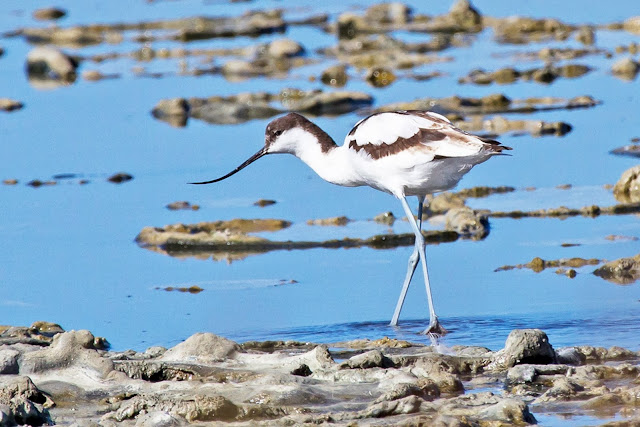
Kingfisher as it dashed past us like the proverbial bolt out of the blue. It required a drive to the far end of the workings to really get amongst the birds where we found very large numbers of both
Flamingos and
Avocets. In addition to the
Black-headed and
Yellow-legged Gulls we had a single Caspian Tern and a range of waders that included
Redshank (mainly),
Dunlin,
Ringed Plover,
Bar and
Black-tailed Godwits along with
Coots and
Moorhens. The connecting track at the far end produced both
Chiffchaff and
Willow Warbler along with
Sardinian Warbler,
Zitting Cisticola and
Northern Wheatear. In addition to a small number of
White Storks it was a pleasure to watch a circling
Black Stork not so far above our heads.

Sandwiches eaten, we made our way eastwards across the provincial border into Sevilla and on to the wonderful
Braza del Este. This is always a good site, even at times like today when the rice had yet to be harvested so that members of the extended heron family were not out in good numbers. Loads of
White Storks to be seen and then, as we started to approach the water pools, the birds started to be seen; first a couple of
Little Grebes and then another
Green Sandpiper. Checking the back of a larger sheet of water we found a pair of
Spoonbill in addition to the
Little Egrets and
Grey Herons whilst, much nearer to us, we were able to watch a feeding
Reed Warbler.
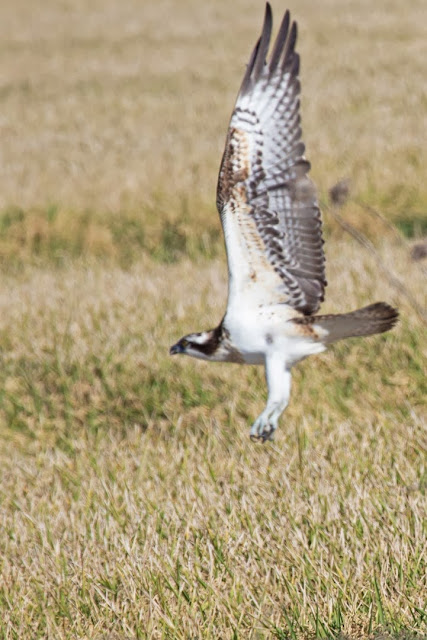 |
| The fabulous Osprey Aguila Pescadora Pandion halaetus waiting for our arrival in the Braza del Este |
No sooner had we moved on than we found an
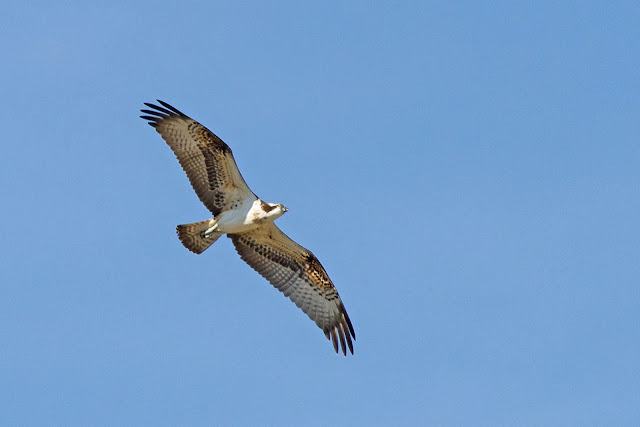
Osprey resting on the nearby bank that seemed to take its time gaining height so, yet again, plenty of opportunity to make use of our cameras. No sooner had it gained some height than it s joined by a
Black Stork to give two views for the price of one. At that moment a
Cormorant flew past just to add a little variety! Meanwhile, on a smaller pool on the opposite side of the track, we not only found more
Little Grebes,
Mallards,
Grey Herons and
Little Egrets but also a couple of
Purple Swamphens.
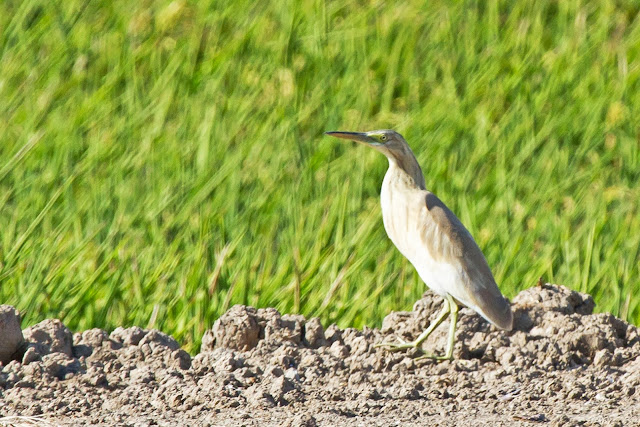
Having seen most of the heron family, I indicated that it would be rather lovely to complete the set with Purple Heron, Squacco and Night Herons given that the great White Egrets may not yet have arrived in the area. No sooner said than don when , looking down a deep drainage channel on the left w found a single "strange" heron. By the time I had convinced Steve that we were actually looking at a juvenile
Purple Heron and taken the necessary photograph, Elena as trying to get our attention to turn our heads to the left where, not ten metres away, was a
Squacco Heron sitting on the concrete sill of the pumping station! We thought we lost the bird when it flew away but then discovered that there were two more in the immediate vicinity so, yet again, more photographic opportunities.
Was that the end of the excitement as we found the right-hand turn off that would take us back to the main road? No. No sooner had we travelled down the track until almost reaching the right-hand band than Steve stopped the car to look at the departing flock of
Lapwing. But was all the noise from the neighbouring tree? Suddenly Steve was looking into the beady red eye of a
Night Heron; not one, but at least a handful. Closer inspection and movement from the birds resulted in us counting at least forty-one including a number of juveniles. So much for saying that I needed one
Night Heron! Job done and all the heron family recorded. But, wait a moment, what was wrong with the female
Serin (which we did record later in the day); they are not that yellow below or even that big. Then the male turned up to confirm our excitement; we had found the local nesting colony, purely by chance, of a large flock of
Black-headed Weavers. The birds were all over the place; in and out of the neighbouring bushes and trees and we managed to identify at least ten nests in the process, presumably, of being woven, from which the birds get their name. In addition to the "African imports" we also found a couple of
Yellow-crowned Bishops so, presumably, these weavers are happy to lived in iced colonies. Not content with these finds, we had a couple of
Snipe on the water below along with a
Wood Sandpiper and the second
Kingfisher of the day flashed past.
+%5BDesktop+Resolution%5D.jpg) |
| Male Black-headed Weaver Tejedor de la Villa Ploceus melanocephalus |
 |
| Female Black-headed Weaver Tejedor de la Villa Ploceus melanocephalus |
 |
| What a happy, active bunch are these sociable Black-headed Weavers |
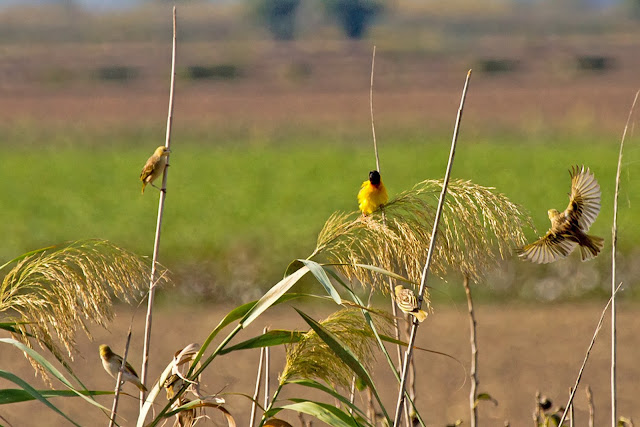 |
| Note the Yellow-crowned Bishop Tejedor Amarillo Euplectes afer to the left of the Black-necked Weaver |
Well, what with the numerous
Yellow Wagtails (
iberiae),
White Wagtails and
Short-toed Larks on the opposite bank as we mad our way along, not to mention a
Sedge Warbler, and we had had a very enjoyable day's birding which totalled some
69 species. Time to head of towards Osuna and find a hotel for the night.
 |
| Short-toed Lark Terrera Comun Calandrella brachydactyla |
 |
| A very pensive Grey Heron Garza Real Ardea cinerea |
Meanwhile, there would appear to be much activity at the Night Heron roost
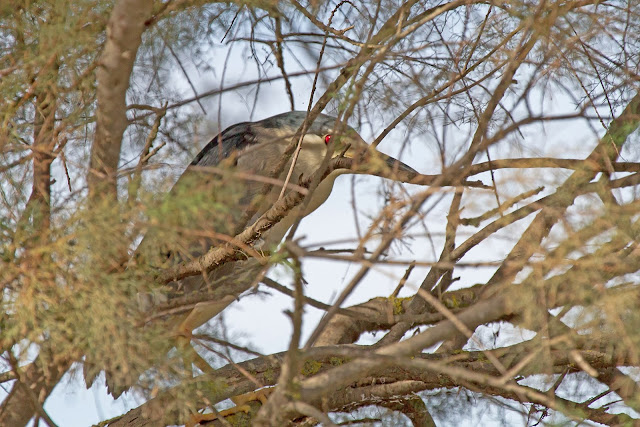 |
| Adult Night Heron Martinete Comun Nycticorax nycticorax with that gorgeous red eye |
 |
A juvenile takes flight compared with his senior as seen below
|
 |
| Adult (above) and juvenile (below) Night Herons at rest |
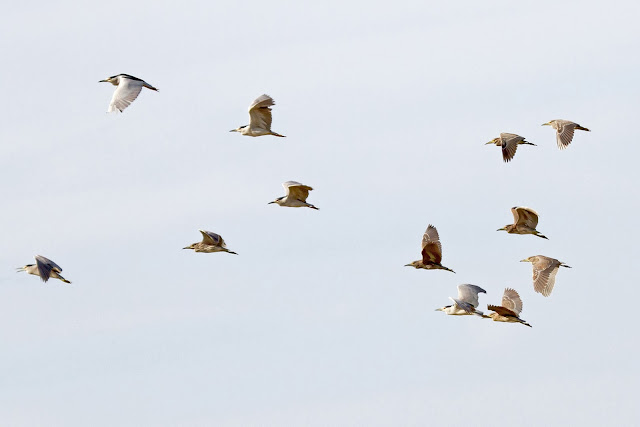 |
| Time for some exercise for both adults and juveniles |
Day 2: Sunday 6 October
On the motorway by 9 o'clock for the short trip down to La Puebla de Cazalla from where we would be undertaking a reverse tour of the "
Osuna triangle" to try and find the Great Bustards and a range of raptors. Approaching the turn-off we had numerous
Spotless Starlings and
Collared Doves plus
Cattle Egrets, a single
White Stork and a
Peregrine Falcon. A very cursory check overnight suggested that the species count to date was about 92 so a further minimum of eight species required to take us up to the ton. Arriving at the right-hand turn towards Osuna we had already added a
Great Tit when we stopped, overlooking the yet-to-be-completed nearby high-speed rail track, to find a lovely
Black-shouldered Kite. The bird was eventually put up and moved on by a
Buzzard, watched over by a pair of
Jackdaws. but that only resulted in revealing the first of very many
Red-legged Partridges, despite the fact that every hunter in the country seemed to be out with is dogs to shoot everything out of the sky.
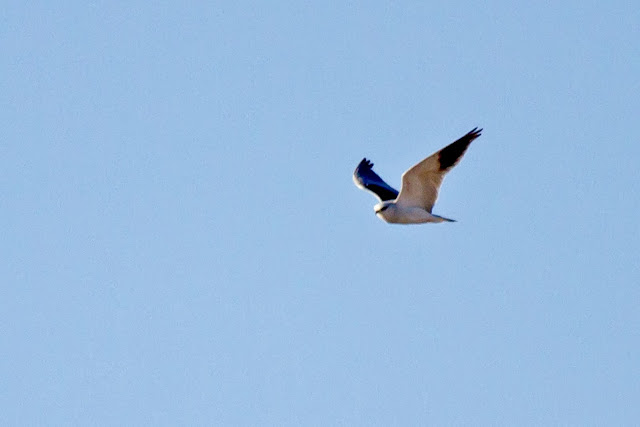 |
| Record shot of Black-shouldered Kite Elanio Comun Elanus caeruleus |
More and more
Crested Larks were up and about along with a couple of
Corn Bumtings and
Hoopoes when we found a single
Pied Flycatcher that simply refused to pose long enough to be photographed. Next it was the turn of more Kestrels and then the first of many
Southern Grey Shrikes followed by large numbers of
Ravens, thirteen being the largest flock seen. Then continued a steady, if somewhat slow, recording of birds including many
Marsh Harriers,
Buzzard,
Sardinian Warbler,
Northern Wheatear,
Zitting Cisticola and
Goldfinches until we decided it was time to make our way further east and call in at both the Laguna Dulce and Fuente de Piedra just over the border in Malaga Province.
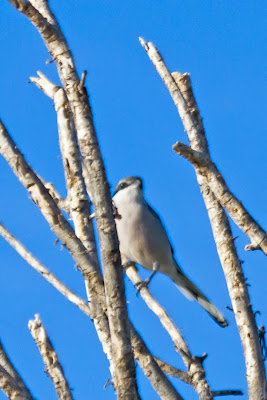 |
| Southern Grey Shrike Alcaudon Real Lanius meridionalis |
Laguna Dulce produced the expected large numbers of
Coots and
Mallards along with a good number of
Shovelers, scores of
White-headed Ducks, a few
Common Pochard a handful of
Gadwall. All three grebes were present with mainly good numbers of both
Little and
Black-necked but not quite so many
Great Crested Grebes. Also present were a small number of both
Flamingos and
Little Egrets and four
Marsh Harriers were busy quartering the area. In the picnic area both
Chidfchaff and
Willow Warbler were recorded and a small flock of about fifteen
Lapwings arrive on the seen to the left of the hide. The only other wader seen was a small group of
Black-winged Stilts.
Very little to be seen on the drive round the eastern side of the lake at Fuente de Piedra other than more
Zitting Cisticolas and
Stonechats along with
Crested Larks. Certainly not the Stone Curlews that we had hoped to find and he Cranes are not expected back until the end of the month at the earliest. The laguna, other than the thousands of
Flamingos, was particularly disappointing and with only one juvenile
Flamingo on the laguneta to the rear and a single
Green Sandpiper. A few
Mallards and
Shovelers along with
Black-winged Stilts and a couple of both
Yellow-legged and
Black-headed Gulls just about summed it all up. By now I suspect that we were all tired and ready for a break so we decided to call it a day and head back to Lake Vinuela and the end of a very enjoyable three days. Whilst I was welcomed home by a number of
Thekla Larks, Steve and Elena were greeted by some rather lovely
Blue Rock Thrushes.
Whilst at the different sites we also managed to see numerous dragonflies and butterflies. There certainly appeared to be many
Lesser and
Larger White butterflies along with
Swallowtails whilst many of the dragonflies seemed to be either male or female
Red-veined Darters or
Lesser Emperors.
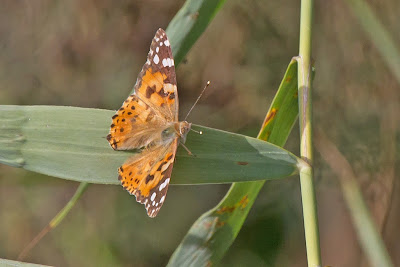 |
| Painted Lady Vanessa cardui |
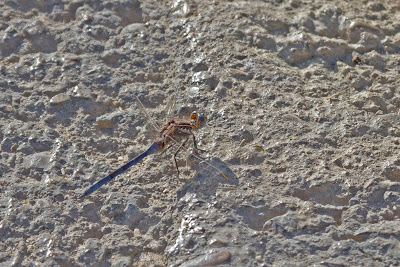 |
| Male Epaulet Skimmer Orthetrum chrysostigma |
 |
| Female Red-veined Darter Sympetrum fonscolombii |
So, until Steve and /or Elena tell me otherwise, it looks as if, number wise, we were successful and topped out at three figures with a final count of
106 species for the three days.
Birds seen:
Gadwall, Mallard, Shoveler, Teal, Pochard, White-headed Duck, Red-legged Partridge, Pheasant, Little Grebe, Great Crested Grebe, Black-necked Grebe, Cormorant, Night Heron, Squacco Heron, Cattle Egret, Little Egret, Glossy Ibis, Bald Ibis, Grey Heron, Purple Heron, Black Stork, White Stork, Spoonbill, Flamingo, Honey Buzard, Osprey, Black-shouldered Kite, Griffon Vulture, Short-toed Eagle, Marsh Harrier, Golden Eagle, Booted Eagle, Sparrowhawk, Buzzard, Lesser Kestrel, Common Kestrel, Peregrine Falcon, Moorhen, purple Swamphen, Coot, Black-winged Stilt, Avocet, Ringed Plover, Grey Plover, Lapwing, Sanderling, Dunlin, Snipe, Black-tailed Godwit, Bar-tailed Godwit, Redshank, Ruff, Black-headed Gull, Audouin's Gull, Lesser Black-backed Gull, Yellow-legged Gull, Caspian Tern, Sandwich Tern, Rock Dove, Wood Pigeon, Collared Dove, Red-necked Nighjar, Alpine Swift, Kingfisher, Hoopoe, Short-toed lark, Crested Lark, Thekla Lark, Barn Swallow, House Martin, Red-rumped Swallow, Yellow Wagtail, Blue-headed Wagtail, White Wagtail, Whinchat,Stonechat, Northern Wheatear, Blue Rock Thrush, Blackbird, Cetti's Warbler, Ziting Cisticola, SedgeWarbler, Reed Warbler, Sardinian Warbler, Blackcap, Chiffchaff, Willow Warbler, Pied Flycatcher, Great Tit, Southern Grey Shrike, Magpie, Jackdaw, Raven, Spotless Starling, House Sparrow, Spanish Sparrow, Tree Sparrow, Chaffinch, Serin, Goldfinch, Corn Bunting, Black-headed Weaver, Yellow-crowned Bishop.


+%5BDesktop+Resolution%5D.jpg)


+%5BDesktop+Resolution%5D.jpg)


+%5BDesktop+Resolution%5D.jpg)


