Sunday, 10 June 2018

Osuna area with John and Jenny Wainwright

Sunday 10 June

Great report from John and Jenny re their visit to the Osuna triangle and not only did John get to see the Scops Owl but also managed a photograph.  Lucky him.  And what abut all those Little Owls nevermind the Iberian Grey Shrikes and a variety of raptors.


Osuna: Sunday 10th June

A very warm day, cloudy, with very little wind.

As  we had had a lazy day on Saturday we decided to have a run out to Osuna, as it is one of the places Jenny doesn´t have to leave the car too much.

As we left the village a Little Owl was spotted on the wires, lets hope it isn´t the 21st victim , as normally happens on this approach road to the village.  Also noted were Collared Doves, House Sparrows and Spotless Starlings.

Not another thing until we got out at the vehicle at the Las Vegas cafe, where we had two Monk Parakeets fly past.  After coffee we headed for Lantejuela and soon spotted a Black Kite circling above a White Stork.

Lots of Corn Buntings, Crested Larks and House Sparrows about on the way to the second road bridge.  Here we located a Raven being mobbed by a pair of Common Kestrels, and a very unusual sighting of a Purple Swamphen on a bank leading to a small water catchment.  On the other side of the road, a male Montagu´s Harrier quartered the fields.

We then drove down the abandoned high-speed rail track for a while putting up from the bushes lining the sides of the track, Spanish and House Sparrows, Iberian Grey Shrike, Corn Buntings, Blackcaps, Stonechats and Chiffchaffs.

Once back on the road we headed for the ruins, en route logging Roller, Bee-eater, Spotless Starlings, Turtle Doves and Hoopoe.  As we approached the ruins a Buzzard came out of the olive grove as did another Roller and a Raven.  As I got out of the car at the ruins  a pair of Lesser Kestrels took off from the roof-top, while a little bit of searching found me a Scops Owl peering at me from behind a branch, anyhow it gave me a few seconds to get three photos of it, before it flew off into the ruin complex, due to my foot slipping off one of the old stones from the building.

Scops Owl Otus scops (PHOTO: John Wainwright)
Back in the car after a cursory search of the ruins, we then spotted a Little Owl and more Rollers. Turning round at the end of the ruins we put up a bevy of Red-legged Partridges and two Red-rumped Swallows came over as did a few Barn Swallows.  At the "roost tower" a Kestrel came out of a nest hole and a Roller flew out from the back of the tower.

Back on the road another two Iberian Grey Shrikes were seen as were more Turtle Doves and three Rock Doves.  As we passed one of the bridges a small party of Collared Pratincoles - some eight in total - were logged as was another Little Owl.  Our last - but by no means least - bird of the day,  was a Booted Eagle.
Iberian Grey Shrike Lanius meridionalis (PHOTO: John Wainwright)

Check out the accompanying website at http://www.birdingaxarquia.weebly.com for the latest sightings, photographs and additional information

Thursday, 7 June 2018

Zafaraya and the Alhama de Granada Lakes

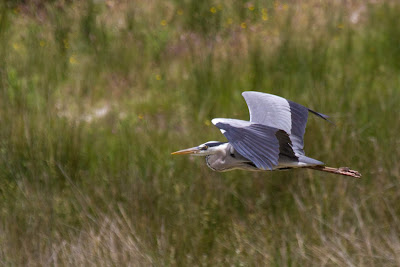
In-flight Grey Heron Garza Real Ardea cinerea
Wednesday 6 June

Off early at 8.45 for a day's birding with special friend Elena Powel concentrating on the lakes above and beyond Alhama de Granada but with a first stop at Ventas de Zafarrya and the nearby "Magpie Woods."  Warm but cloudy and very tired when we got back to Mezquitilla having recorded a total of 60 species for the day including some great birds such as Common Cuckoo, Blue Rock Thrush, Great Spotted Woodpecker, Whitethroat and Spotted Flycatcher amongst others.

Approaching the first stop the mirador on the old railway track at Ventas de Zafarraya we not only had a couple of Hoopoes fly over the road but a couple of score or more of Barn Swallows.  It seems too late to be arriving and too soon for departing individuals so I am assuming a "gang of roving teenagers" made up of recently fledged first brood Barn Swallows.  Cloudy and a very large herd of goats (domestic not wild) feeding on the slopes but we did find Thekla Lark, Chough and Black Wheatear before driving up the track and parking outside the old tunnel. A good number of the breeding Crag Martins about and saw more Blue Rock Thrushes than Black Wheatears.  A Wren was perched on the wire in front of the tunnel and the Choughs were whirling and calling along the cliff face.  Both Rock Sparrow and Rock Bunting were noted along with a couple of Blackbirds and then, having walked trough the tunnel, a couple of Alpine Swifts.  Elena was first to spot the single Goldfinch.

Spotless Starlings, House Martins and House Sparrows as we drove through the village to make a short stop at the usual cross-tracks as we entered the Magpie Wood.  Immediately, an Azure-winged Magpie on the road and another disappearing int the trees.  More Blackbirds, a Mistle Thrush and plenty of Chaffinches to be seen and heard as the Collared Doves flew over.  Through the woods and took the left turn towards the growing fields to find the resident larks and immediately, sat on the road, a Turtle Dove.  Having stopped we found six more either feeding on the ground or resting on the overhead wires.  A Corn Bunting rested alongside and as soon as we reached the "rockery" a handful of Short-toed Larks along with Crested Larks and, having stopped in the usual place, we were soon seeing a good number of Calandra Larks along with a pair of feeding Hoopoe.

Little Owl Mochuelo Comun Athene noctua
A good job we decided to take the old road up to main Alhama to Salar road as we not only had some incredible bird sightings but also discovered that the abandoned and pot-holed road had now been graded and perfectly safe for even "normal" cars.  At least half-dozen Common Magpie and then not one but two Little Owls posed close to the road.  Wood Pigeons and Common Swifts above and even a handful of Linnet. A short stop at the old ruined farm buildings off the main road was evidence that Lesser Kestrel numbers are down this year with only a quartet seen but also a single Common Kestrel.  Also present a lively Zitting Cisticola.
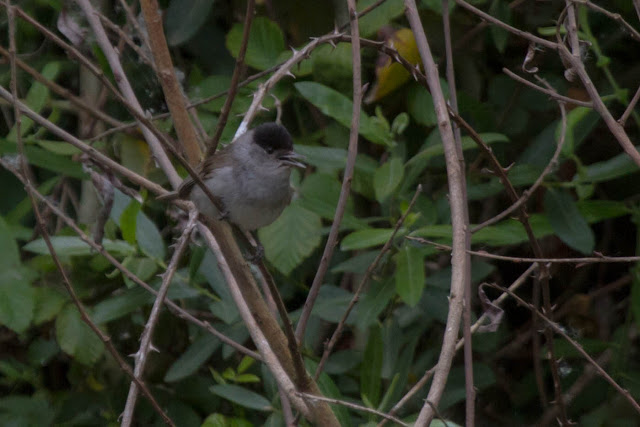


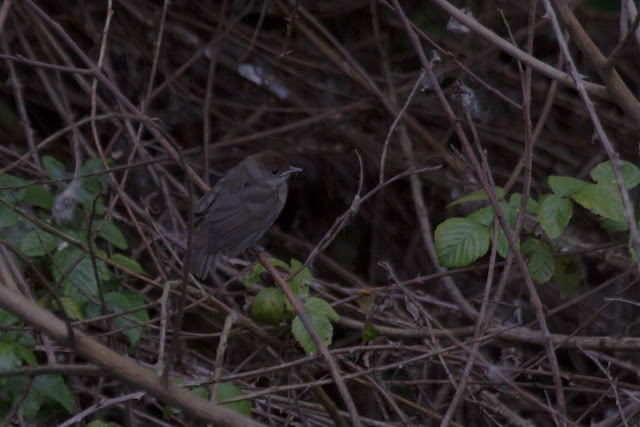
Male (above) and female Blackcap Curruca Capirotada Sylvia atricapilla at nest site
Then it was on through the town of Alhama de Granada, past the cemetery and off to the large Los Bermajales reservoir.  Approaching the water a Common Cuckoo flew across the road immediately in front of the car and stopping in the woods as we approached we had many Chaffinches and a Great Tit.  The dam area was alive wit feeding House Martins and other than these birds feeding over the water and a lone, resting Cormorant there was not a bird to be seen.  A walk around the picnic area produced both Short-toed Treecreeper and Greenfinch along with a few Magpies and a Marsh Harrier which took to the air having been disturbed by a wandering walker near the water's edge.  Further round we also added White Wagtail, Mallard, a nesting Coot and at least eight Grey Heron from the nearby heronry.  We also saw and heard both Cetti's Warbler and Jackdaw.
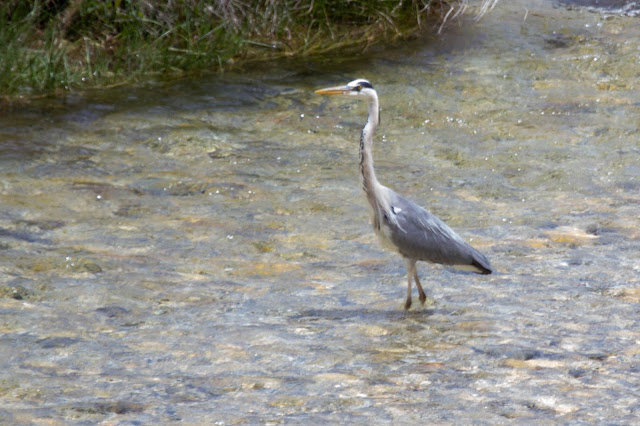
Grey Heron Garza Real Ardea cinerea
Next, following a meal in the nearby venta, a walk down the track alongside the outflow from the lagunetta above Alhama de Granada. On the water there had been just the single Little Grebe and a very small number of Mallard and Pochard.  Straight away a Robin and, probably, nesting pair of Blackcap.
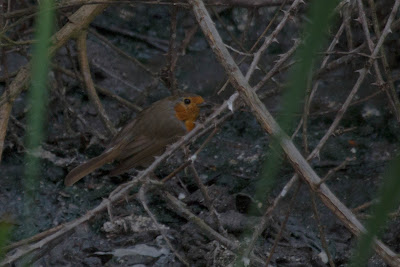
Robin Petirrojo Europeo Erithacus rubecula
Meanwhile the song and calls of the Nightingales was almost deafening and even a Golden Oriole was calling from the woods beyond.  Both Grey Wagtail and Serin were quickly found and, having crossed the small bridge to walk down to the shrine, we were able to add Goldfinch, more Blackcaps, a Cirl Bunting and Whitethroat before arriving in front of the gorge which produced Jackdaw, loads of Chough, Rock Sparrow and even a close view of another Blue Rock Thrush.  Wood Pigeon was sitting tight on her nest as a Red (black out here) Squirrel ran along a fallen trunk before taking to an upright tree.  A couple of Spotted Flycatchers were working the far clearing and the return walk produced House Martins, Barn Swallow and Spotless Starling along with a couple of recently fledged Great Tit.  Even a Great Spotted Woodpecker took to the airs to prove another sighting for the day which, by now, had just about reached the sixty mark.

Red Squirrel Sciurus vulgaris

An excellent day's birding enjoyed by both of us with Elena looking forward to Steve's return from Florida on the morning and me off to check Jenny's progress at the local hospital.

Birds seen:
Mallard, Pochard, Little Grebe, Cormorant, Heron,Marsh Harrier, Lesser Kestrel, Common Kestrel, Coot, Rock Dove, Wood Pigeon, Turtle Dove, Collared Dove, Little Owl, Alpine Swift, Common Swift, Hoopoe, Great Spotted Woodpecker, Calandra Lark, Short-toed Lark, Crested Lark, Thekla Lark, Crag Martin, Barn Swallow, House Martin, Grey Wagtail, White Wagtail, Wren, Robin, Nightingale, Black Redstart, Black Wheatear, Blue Rock Thrush, Blackbird, Mistle Thrush, Cetti's Warbler, Zitting Cisticola, Whitethroat, Blackcap, Spotted Flycatcher, Great Tit, Short-toed Treecreper, Golden Oriole, Azure-winged magpie, Magpie, Chough, Jackdaw, Spotless Starling, House Sparrow, Rock Sparrow, Chaffinch, Serin, Greenfinch, Goldfinch, Linnet, Cirl Bunting, Rock Bunting, Corn Bunting.
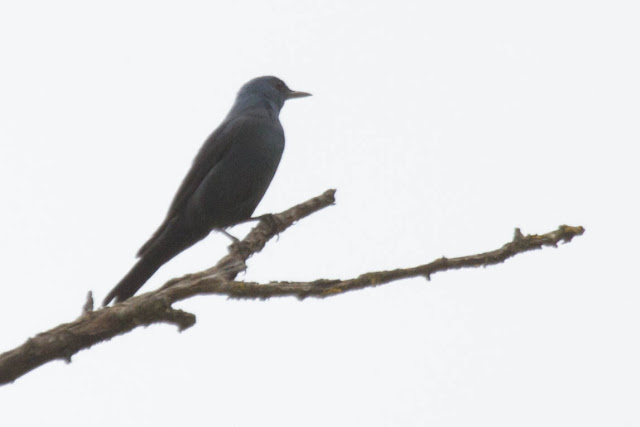
Male Blue Rock Thrush Roquero Solitario Monticola solitarius


Check out the accompanying website at http://www.birdingaxarquia.weebly.com for the latest sightings, photographs and additional information

Cabo de Gata with the Arboleas Birdig Group

Wednesday 6 June

Another good day's birding for Dave and his Arboleas Birding Group with some lovely sightings.  Obviously, at the moment, waders seem to be a bit of a rarity and where were all the Flamingos, were they counted in scores or hundreds?


Cabo de Gata & Rambla Morales: Wednesday 6th June

As I was on my own this morning, I made an early start to do the rear of Cabo de Gata reserve before meeting up with the others at 09.30hrs.  I was at the start of the rear track by 07.45hrs.  Weather was sunny, but the sun had not yet completely cleared the mountains so I was in shade to begin with.  The sea was surprisingly rough with breakers crashing onto the beach and fine spray coming over the road.  The first birds I saw were Yellow-legged and Audouin's Gulls resting on the salina.  Thekla Larks were quite numerous.  On the water's edge of the next salina produced Avocets and  long-legged fluff ball chicks, Grey, Ringed and Kentish Plovers and a handsome Slender Billed Gull.  Also seen were Greater Flamingos and Shelduck.  Smaller birds included Sardinian Warbler, Common Swift and Iberian Grey Shrike.  As I reached the last field I spotted a pair of Lesser Short-toed Larks. I ended my short tour with Hoopoe, Kestrel and Greenfinch.

Slender-billed Gull Larus genei (PHOTO: David Elliott-Binns)

I met up with Barrie, Beryl, John and Pete in the Pastelaria cafe near Pujaire.  I noted our usual cafe in the village had now re-opened after refurbishment.  As I parked there I saw Red-rumped Swallows. Barrie and John had seen a Little Owl on a nearby building which was still there as we left....the Little Owl as well as the building!  We headed to the first hide, seeing Blackbird, Barn Swallow and Kestrel on the way.  There was a Black-tailed Godwit with some Black-winged Stilt on the small pool to our left.  5 further Godwits were near the rocky causeway together with Avocets and 5 Gull-billed Tern.  A Little Tern was diving for fish.  Also seen were Mallard, House Martin and Yellow Wagtail. Jacky then arrived, followed by a coach full of kids, parents and teachers so we made a tactical exit, heading for the second hide.
 
Ringed Plover Charadrius hiaticula (PHOTO: David Elliott-Binns)
A brief sea-watch produced a couple of Sandwich Terns spotted by Barrie.  He also spotted a low flying Whimbrel from the hide.  A pair of Pallid Swifts showed well. The public hide only added Sanderling to the list, but we saw more Grey Plover, Yellow Wagtail and Shelduck.

Fluffy Avocet chick  Recurvirostra avosetta (PHOTO: David Elliott-Binns)
We headed to the lighthouse hoping to see some Peregrine Falcons, but alas, no sign of them.  A pair of Black Wheatear was our only addition.  Here Jacky was tempted away by the chance of a new walk in stunning scenery.  Us others drove up to the Vela Blanca ridge.  Barrie spotted a Rock Bunting on a power line.  Pete and I saw a pair of them on the way down.
We convoyed along to the Rambla de Morales.  The wind had increased.  We saw a White Wagtail on the track.  As we parked up, a pair of Black-winged Stilt flew off from the estuary.   In the reeds we heard both Great Reed and Reed Warblers.  From the "hump" we found a few White-headed Duck, a Coot and a pair of Black-necked Grebe.  More Pallid Swifts showed well as did a House Martin.  We headed back to the vehicles.  A tern landed on the beach, but was disturbed by a passing cyclist. Barrie and John later saw it was a Common Tern. 
After our lunch outside the beach cafe in Cabo Village where Pete spotted an overflying Audouin's Gull, I suggested we checked out the Lesser Short-toed Lark site from earlier.  Luckily there was one still there.  Pete and I missed the Raven the others saw from their car!
We ended up with 45 species for the day. Good weather, company and birding.  What more could you ask for?
Regards, Dave


Check out the accompanying website at http://www.birdingaxarquia.weebly.com for the latest sightings, photographs and additional information

Tuesday, 5 June 2018

Rio Genil with John and Jenny Wainwright

Tuesday 5 June

Good to read that Jenny is still able to continue birding with her broken limbs even if still restricted to the car.  Reading John's report some good birds were seen so hope I can replicate tomorrow (Wednesday).


Rio Genil:  Monday 4th June

(Iberian) Yellow Wagtail Motacilla flava iberiae (PHOTO: John Wainwright)
A very warm day with a slight breeze.

We stopped for coffee prior to going to the river, here a few hirundines - namely House Martins and Barn Swallows - were about, as well Collared Doves and Spotless Starlings.
As we approached the river, Common Swifts and Red-rumped Swallows were logged, and as we followed the course we saw Jackdaws, Kestrel and Woodpigeon.  Green Woodpeckers were heard and a couple of Golden Orioles were noted.  A Great Spotted Woodpecker tapped away relentlessly at an old decayed tree, while in the bushes lining the river, Nightingales, Blackcaps, Cetti´s Warblers, Goldfinches, Chaffinches, Blackbirds and Serins were seen.
As I was scanning the ridges of the hills here, I spotted a Bonelli´s Eagle just sitting on a rock.  He, or she, sat there for over two hours while we were photographing insects and flowers.  I think it one of the pair we have seen here for the past few years, although I have not found nest site.  Lots of Azure-winged Magpies and a few Common Magpies hereabouts and two Bee-eaters passed over but never stopped in view.

Bonelli's Eagle Hieraaetus fasciatus (PHOTO: John Wainwright)
One of our favourite areas was a poplar copse where we used to have good views of the Golden Orioles that nested here every year, but sadly the copse has been cut down and new olive trees planted. We did however get views of an Oscillated Lizard out hunting in a small olive grove, and at small sandy area a Little Ringed Plover, a Yellow Wagtail, several Turtle Doves and a Grey Wagtail were logged.

Ocellated Lizard Lacerta lepida (PHOTO: John Wainwright)
Wind has picked up in strength so making our way back to Salar.

Little Ringed Plover Charadrius dubius (PHOTO: John Wainwright)

Check out the accompanying website at http://www.birdingaxarquia.weebly.com for the latest sightings, photographs and additional information

Wednesday, 30 May 2018

Sierra de Maria with the Arboleas Birding Group

Wednesday 30 May

Whilst I was exporing the Guadalhorce with US birding contact Mary Dokery, Dave and his Arboleas Birding Group were back up at the Sierra Maria and some good birds they turned, some of which would be year firsts for me.  And judging from the photograph, Great Spotted Woodpeckers are easily tempted by a little white bread!


Sierra de Maria:  Wednesday 30th May

Was on my own travelling to the Sierra de Maria this morning.  The sun was out so I'd dressed in shorts and T-shirt.  By the time I'd got to Maria there were clouds in the sky and a chill in the air!  As I waited for the others to arrive I watched the House Martins nesting in the forecourt canopy of the town's Repsol Garage.  I was joined by Barrie, Beryl, John, Brian, Mary and lastly Trevor and Ann. We drove up to the chapel car park, seeing Magpie, Chaffinch and Collared Dove, but the star was a Sparrowhawk.  Following behind, Brian and Mary saw a Booted Eagle with a pigeon breakfast!  We parked up with two coach loads of school children.  Also the local council were strimming the grass between the chapel and the water fuente!  It was agreed that we'd retreat and do the plains before returning later.  A Griffon Vulture or two glided effortlessly over us.  On the way down we met Jacky and Steve.  They decided to do the high walk, so we'd meet up later.
We headed in convoy to the old farm buildings, seeing Jay, Blackbird and Woodpigeon on the way.  Arriving first I saw Rock Sparrow departing.   About three Hoopoes could be heard, Barrie also hearing a Woodlark call.  Brian spotted a Corn Bunting.  I wandered round the buildings seeing Goldfinch and more Rock Sparrows.  Barn Swallows were in evidence and John found a Red-rumped Swallow.
Short-toed Lark Calandrella brachydactyla  (PHOTO: David Elliott_Binns)
Moving on to the farm trough area, two Turtle Doves flew off as we arrived.  Crested Lark and Rock Sparrows were seen.  A distant Booted Eagle was seen.  We heard a bird calling from the hillside behind us.  I scanned the area and found one of the two Stone Curlews seen.  A first for us at Maria!  I then found a male Northern Wheatear near the sheep feeders.  A Hoopoe flew past.
We left there and drove slowly along the plain.  In the leading car, I saw only Crested Larks at first, but then found a pair of Short-toed Larks.  A pair of Red-billed Chough flew off as we passed.  I spotted our only Common Swift of the day.  Calandra Larks were battling it out above the foot long wheat stems.  At the hamlet we saw only two Lesser Kestrels.  On the way back I spotted a Yellow Wagtail, but missed the Short-toed Eagle and Griffon Vultures the others saw!  Brian also had a Raven.
We returned to the chapel area where the council gang were now painting walls.  A lot of work had been done.  They had refurbished the water trough and the BBQ area had been removed.  Walking up towards the Information Centre, a Melodious Warbler was singing from a shrub top as was a Stonechat a bit further up.  

Male Stonechat Saxicolatorquatus (PHOTO: David Elliott_Binns)
We also had a Serin.  At the Centre the kids were in the building, so we sneaked into the gardens.  Nothing near the pools ( due to the noise?) but we did manage to see a few Bonelli's Warblers as we joined the lower walk.  We met up with Jacky and Steve on their way down. They'd seen Crested, Blue and Coal Tits plus a Subalpine Warbler.  A female Crossbill showed well. Barrie heard a Firecrest and we were lucky enough to get some brief glimpses of a few of them.  We passed the kids as we approached the gardens.  A Subalpine Warbler followed by a Rock Bunting and Bonelli's Warbler took advantage of the relative silence to get a drink.

Melodious Warbler Hippolais polyglotta (PHOTO: David Elliott_Binns)
We then went for lunch at the La Piza forest cafe.  As we enjoyed our snack Chaffinch, Blue, Great, Coal and Crested Tits came to the bird feeders.  We saw a Iberian Green Woodpecker, Mistle Thrush, Jay and a Sparrowhawk the far side of the track.  A female Greater Spotted Woodpecker came to the discarded bread rolls.  On the way back to Velez Blanco I added a White Wagtail and had a positive sighting of a Woodlark.

Female Great Spotted Woodpecker Dendrocopos major (PHOTO: David Elliott_Binns)
All in all we had a great day. 48 species. Great company, bit chilly though!
Regards, Dave
 
Check out the accompanying website at http://www.birdingaxarquia.weebly.com for the latest sightings, photographs and additional information

Guadalhorce, Malaga

Wednesday 30 May

A most enjoyable morning at the Guadalhorce, Malaga with visit US birder Mary Dockery from Birmingham, Alabama and which resulted in over 40 species during our almost four hours.  Mary had set her eyes and heart upon seeing both Bee-eater and Hoopoe and I had promised to add a White-headed Duck.  Upon collecting Mary at the Plaza Mayor (what a mess this is with every car space closed off and nowhere to park) there were resident House Martins flying around their newly-restored breeding colony and, whilst awaiting my arrival, Mary had already had a Hoopoe fly past to make it sound like a very promising start to the day.  And before reaching the entrance to the Guadalhorce reserve we had also also added Collared Dove, Monk Parakeet and House Sparrow.

Hoopoe Abubilla Upupa epops in flight
Crossing the footbridge there were a few resident Rock Doves under the motorway bridge and numerous House Martins flying around our bridge and visiting their nests below.  Posed nicely next the bridge was a Red-rumped Swallow so very confirmed the earlier photograph taken by Mary.  Slightly upstream a lone Little Egret waited patiently at the water's edge as we continued on to the eastern arm of the Guadalhorce and the Laguna Casillas.  A rather pleasant group of birds here including very many Black-winged Stilts, some incubating, others just starting to lay their clutch whilst some already had chicks ranging from days to weeks old.  A pair of Mallard along with a handful of Common Pochard but just the one pair of White-headed Ducks and a single Coot.   Overhead very many House Martins with the occasional Barn Swallow but these were joined by scores of Swifts, mainly Common but a few Pallid.  A Nightingale was singing to our left.

Male White-headed Duck Malvasia Cabeciblanca Oxyura leucocephala
Moving on towards the Wader Pool we had a couple of Serins on the track and a small number of Goldfinches feeding in the vegetation below. A second Hoopoe put in an appearance, and there was to be a third whilst at the Escondida hide, and then we were once more looking at many Black-winged Stilts along with a sole Crested Lark on the sandy island below.

However, it was the Rio Viejo (the Old River) which really turned up trumps.  Not jut the small mixed flock of gull-like birds which included, mainly, Audouin's Gulls, juvenile Yellow-legged Gull, Sandwich, Little and a single Caspian Tern but also a couple of Grey Plovers in beautiful summer plumage, a Redshank, quartet of Dunlin, three Avocet and very many Little Ringed Plovers.  It took a short while but we eventually also found a few Kentish Plovers.  A Sardinian Warbler dashed between the bushes below us and, on the opposite side of the track, a male Blackbird arrived as a quintet of Spotless Starlings moved on.

Little Ringed Plover Chorlitejo Chico Charadrius dubius
A visit to the Sea Watch produced a calm sea and eventually about a dozen resting Mediterranean Gulls.  Returning to the Wader Pool we added a Bonelli's Warbler and manged to find a quite large Chameleon in a distant Tamerisk.  A Common Waxbill landed on the top of the same bush and yet another Nightingale was singing before we continued on to the Casillas Pool which produced a Zitting Cisticola and a couple of Moorhen.

Walking towards the Laguna Escondida Mary stopped having seen a small bird a the bottom of a bush which turned out to be a second Sardinian Warbler but almost next to her bird was a female Subalpine Warbler and then the female Sardinian Warbler put in an appearance.  But, hark, what was that we heard overhead?  Yes, our first Bee-eater of the morning but it was gone before Mary could raise her bins.

Bee-eater Abejaruco Europeo Merops apiaster in flight

Not to worry, a hundred metres further on we found the bird, or another one, resting on top of a bare tree so Mary able to take photographs.  The Escondida itself was very quiet with just a pair of White-headed Ducks and many swifts and hirrundines above but then a trio of Bee-eaters arrived and posed very obligingly near the hide in a bare bush.  Wonderful views.

Bee-eater Abejaruco Europeo Merops apiaster

Again, the Laguna Grande was relatively quiet with a few Black-winged Stilts and their families.  To the back a small group of Back-headed Gulls and then a couple of Whiskered Terns arrived to help make our day even more exciting.  Below us a pair of Kentish Plovers were, presumably, approving of their nest scrape when before we could blink mating took place; full frontal nudity.  We assume that copulation was successful albeit we both laughed when the the male fell off backwards taking the female with him and the undignified scramble that followed as they tried to recover their feet; what a way to remember the morning!  Walking back to the car a flight of four Monk Parakeets, not so raucous and noisy on this occasion, passed overhead.

Hoopoe Abubilla Upupa epops

Birds seen:
Mallard, Common Pochard, White-headed Duck, Little Grebe, Little Egret, Moorhen, Coot, Black-winged Stilt, Avocet, Little Ringed Plover, Kentish Plover, Grey Plover, Dunlin, Redshank, Mediterranean Gull, Black-headed Gull, Yellow-legged Gull, Caspian Tern, Sandwich Tern, Little Ter, Whiskered Tern, Rock Dove, Monk Parakeet, Collared Dove, Common Swift, Pallid Swift, Bee-eater, Hoopoe, Crested Lark, Barn Swallow, Red-rumped Swallow, House Martin, Nightingale, Blackbird, Zitting Cisticola, Subalpine Warbler, Sardinian Warbler, Bonelli's Warbler, Spotless Starling, House Sparrow, Common Waxbill, Serin, Goldfinch.


Check out the accompanying website at http://www.birdingaxarquia.weebly.com for the latest sightings, photographs and additional information

Tuesday, 29 May 2018

Three Owls Species in One Tree!

Tuesday 29 May 

When was the last time, if ever, that you recorded three consecutive owl species in your notebook?  Well it happened to we five today.  Meeting up at the usual venta at Exit KM80 on the A92 towards Sevilla, Derek and Barbara, Micky, Lindsay and I set off to explore the Osuna area in search of both Collared Pratincoles and Rollers.  But is just after lunch when a certain gentleman, not Derek nor I, needed to answer a call of nature behind a bushy tree.  No sooner had nature got to work that both single Little and Tawny Owl cam dashing out from cover and took opposite directions reaching the end of the old ruin.  Derek and I watched the Tawny whilst the ladies followed the progress of the Little Owl.  Having spent some time wondering where the owls might have settled it seemed a good idea to go back to the tree and see if there were any pellets on the ground below.  Derek and Micky led the way and turning behind the tree came face to face, at less than a metre at eye height, with a little chap that, no matter how much he sucked in his chest to make himself look bigger with his little ear tuffs pointing straight up, returned the stare of those in front of him.  I'm still not sure who was most shocked, the chaps or the Scops Owl.  For me it was the sudden dash from cover which caught my attention as I was a few steps behind and I think the ladies saw our surprised quarry dashed across the open ground in front and disappear as quickly as he appeared.  Now it has to be said that this is not the first occasion when our friend has managed to flush a bird in the way of the first two owls; last time it was a Red-knecked Nightjar.  Now it certainly puts a new interpretation on, literally, flushing a bird out!"

Short-toed Lark Terrera Comun Calandrella brachyactyla

But back to the start of the morning.  Leaving the venta we had a lone White Stork and no sooner on the country lane the first Stone Curlew of the morning along with Spotless Starlings and House Sparrows.  These first kilometre or two produced Crested Lark, Corn Bunting and numerous Barn Swallows before a pair of Turtle Doves flew on to a nearby power line.  Both Raven and Common Swift flew over and then at our first stop we picked up a single Woodchat Shrike, a couple of Bee-eaters and both Black and Red Kite along with singing Reed Warblers.  On the opposite side of the road we had our of a few Buzzards and a pair of Short-toed Larks walked the track.


Turtle Dove Tortola Europea Streptopelia turtur

On up to the first high bridge over the abandoned high-speed rail track where, from above, we were able to observe a couple of close Stone Curlew and a Red-legged Partridge casually walking down the main road.  Further on along this track we stopped to watch six Black-bellied Sandgrouse fly very close before gradually disappearing away to our right.  Good numbers of Calandra Larks were recorded plus a couple of Sky Larks.  At the back of the field a Marsh Harrier was quartering the area and even a quintet of Gull-billed Terns looking for tit-bits.  Then a really special treat as Derek used the scope to confirm a posing Little Bustard on the edge of the ripening corn.  A Woodpigeon was seen over the trees to the left and then our first Collared Pratincole, in the air and quite distant.  A Booted Eagle drifted by and before returning along the track we also found a small colony of breeding Lesser Ketsrels and a distant Griffon Vulture.  Along with the many Crested Larks, Corn Buntings and Spotless Starlings I found a very small charm of Goldfinch.

Lesser Kestrel Cernicalo Primilla Falco naumanni

Back on the road and a stop at the second high bridge produced a pair of Red-rumped Swallow along with Linnet and a Spanish Sparrow.  Overhead a couple of Bee-eaters and then, driving towards the turn to the third bridge, a Collared Pratincole flew out from the field and came to rest on the road immediately in front of me, less than twenty metres away.  A second individual was found on the ploughed field as soon as we turned to the bridge.

Collared Pratincoles Canastera Comun Glareola pratincola
On the wires two Iberian Grey Shrike and then on to the old farm ruins on the corner before taking the track down to the abandoned cortijo.  Once stopped at this point for our picnic lunch we had our first distant Roller, a Hoopoe and more Barn Swallows and even a few House Martins.  nearby we had, and saw, singing Nightingales.  Working our way down the track we had closer looks at a handful of Rollers.

Roller carraca Europea Coracias garrulus
Our final stop was on the the viaduct of the high speed track and still a little damp with a very small amount of water which held a number of Black-winged Stilts and Avocet.  A few Cattle Egrets feeding amongst the grazing fighting bulls and a good-sized flock of Lapwing.  We even had a lone Glossy Ibis drop in to take advantage of the small stream.

Iberian Grey Shrike Alcaudon Real Lanius meridionalis
From here we split so that I could call in at Fuente de Piedra but upon reaching the salinas no sign of either Lesser Yellowlegs nor Lesser Flamingo which were seen just nine days ago.  Lots of Flamingo, Avocet and Jackdaws and ducks included Mallard, Pochard, Red-crested Pochard and Shoveler.  But only one Little Grebe seen and barely a handful of Coot and no Moorhen.  And then a very slight detour on the way back to Mezquitilla which successfully produced  Rufous Bush Chat.

Birds seen:
Mallard, Shoveler, Red-crested Pochard, Common Pochard, Red-legged Partridge. Little Grebe, Cattle Egret, Glossy Ibis, White Stork, Flamingo, Red Kite, Black Kite, Griffon Vulture, Marsh Harrier, Booted Eagle, Lesser Kestrel, Common Kestrel, Coot, Little Bustard, Black-winged Stilt, Avocet, Stone Curlew, Collared Pratincole, Black-headed Gull, Lesser Black-backed Gull, Gull-billed Tern, Black-bellied Sandgrouse, Rock Dove, Woodpigeon, Turtle Dove, Collared Dove, Scops Owl, Little Owl, Tawny Owl, Common Swift, Bee-eater, Roller, Hoopoe, Calandra Lark, Short-toed Lark, Crested Lark, Sky Lark, Barn Swallow, Red-rumped Swallow, House Martin, Rufous Bush Chat, Nightingale, Reed Warbler, Iberian Grey Shrike, Woodchat Shrike, Jackdaw, Raven, House Sparrow, Spanish Sparrow, Goldfinch, Linnet, Corn Bunting.


Check out the accompanying website at http://www.birdingaxarquia.weebly.com for the latest sightings, photographs and additional information