Sunday, 3 March 2013

Fuente de Piedra & Laguna Dulca

Whilst I was down at the Rio Velez and then waiting for the computer to come back on line, It seems that John and Jenny Wainwright were once more about their birding travels and this time, the day before me, to Fuente de Piedra and the Laguna Dulce amongst other places.  It cannot have been that bad, despite the strong winds, as they managed to find both Little Bustard and Ferruginous Duck.  Their report follows below and, as John says, with Jenny in charge of the camera on this occasion.


Fuente de Piedra & Laguna Dulce:  27th February 2013

A very warm day although still very cold in the shade.  As we drove up the road to the car park the left hand flood-meadow gave us Redshank, Shoveler, Black-winged Stilt and Black-headed Gull.  We then headed for the boardwalk area; here we saw Zitting Cisticola, Chiffchaff, White Wagtails, Common Coots, Moorhens, a Little Stint and three Black-tailed Godwits.  In the marshy area we found a single Snipe, Little Ringed Plovers and Meadow Pipits.


On and around the scrapes we found more of the all the former and a lone Reed Bunting.  From the mirador we looked over the main laguna, all the Greater Flamingos were in the right hand corner  (into which the wind was blowing) also with them were Shovelers, Teal, Mallard, Avocets and five Shelduck.  Above the ducks we saw House and Crag Martin and Barn Swallows, as well as Yellow-legged and Black-headed Gulls.  In the shrubs and bushes below the mirador a Sardinian Warbler was heard as well as Robin and Black Redstart.


Onto the Laguneta, the islands had been completely stripped of any cover, where we saw Jackdaws, Black-winged Stilts, more Black-headed and Yellow-legged Gulls, Shovelers, Teal, Mallard, a Redshank, Little Grebe and Pochard.


As we were leaving the centre, two Woodlarks flew into the light rough .   As we drove up to the Cantarras Mirador we found a few Common Cranes feeding in the fields to our left but the bulk of them were in and just in front of the olive groves to our right.  At the mirador the wind was gusting really hard and it was a job to keep the scope still, but we did manage to find several Great Crested and Little Grebe, Greater Flamingos, two Red-crested Pochard and a few Common Pochard.


Laguna Dulce:
On the way we saw two Common Kestrels and  just opposite the turning for Bobadilla Station, Jenny spotted a group of some twenty Little Bustards feeding in the remnants of a flood-meadow not forty yards from the road. 


Little Bustards Sison Comun Tetrax tetrax (PHOTO: Jenny Wainwright)
At the hide we located another eight Great Crested Grebes plus more Common and Red-crested Pochard a few Black-necked and Little Grebes, White-headed Ducks, good numbers of Coots, and a handful of Black-headed and Yellow-legged Gulls.  In the reeds and the bushes around the laguna we saw Blackcap, Corn Bunting, Chiffchaffs, Cetti´s and Sardinian Warblers, House Sparrows, Goldfinches and a few Spotless Starlings.  Masses of hirundines here, Barn Swallows, House and Crag Martins but no Red-rumped Swallows or Sand Martins were seen today.  A single female Marsh Harrier was seen as well as a single Lapwing.

Ferruginous Duck  Porron pardo Aythya nyroca (PHOTO: Jenny Wainwright)
We then journeyed round to the hide at the Laguna Redonda where we found four Ferruginous Ducks along with several common Pochards. Coots had started nesting on the small islands here, also here we saw Black-winged Stilts, Little Grebe and the same hirundines as before.

I think possibly that the strong winds accounted for the small tally of passerines today, but its not Spring yet awhile!!


Great day John and many thanks for the report.


Check out the accompanying website at http://www.birdingaxarquia.weebly.com for the latest sightings, photographs and additional information. 

Rio Velez, Torre del Mar


3 March 2013

Apologies for the delay; Internet has been down for three days following heavy storms early on Thursday 28 February.


Rio Velez, Torre del Mar:   28 February

The last day of the month, Andalucia Day, and the morning started very damp following heavy overnight rain and even a little slushy snow down as far as Casa Collado at 550 metres but, at least, it was dry and signs of breaks in the cloud to reveal a little promised sun.  So, without more ado, it was into the car, wipe the small amount of slush of the windscreen, and head down to the Rio Velez in Torre del Mar.  No sooner away from the house and I had Thekla lark, Rock Bunting and Chaffinch before reaching the bottom of the mountain whereupon I quickly added White Wagtail, Spotless Starling, Blackbird, Serin and Chiffchaff.

Parking near the beach the sea was throwing up a few large waves and it was not so much "Surf Scoter" as a score of human surfers in the water; are these people mad, even with, presumably, dry suits?  A couple of Blackbirds and the first Hoopoes as I put on Wellington boots to walk along the shore towards the rive mouth.  Next up White Wagtails, Goldfinches, Crested Lark and Chiffchaffs before the first hirundines were spotted with a couple of House Martins and a single Crag Martin.
Hoopoe Abubilla Upupa epos
Reaching the edge of the river it was quickly apparent that the area was being used by a large mixed flock of gulls and Cormorants to shelter from the fairly rough sea.  Mainly Mediterranean but also a small number of Black-headed and Yellow-legged Gulls before finally finding a few Audouin’s Gulls.  A small number of Moorhen were also using the area and waders consisted of a score of Sanderling plus a single Little Ringed Plover and a pair of Ringed Plovers.  Further upstream the air was black, just like a horde of midges, as hundreds of hirundines fed over the river.  Lots of House Martins and Barn Swallows but also a dozen or so of Crag Martins and, at last, a small number of Red-rumped Swallows.

Next a walk up river to the road bridge and return.  Feeding from a small branch floating on the river’s edge below a bush was a Wren with a Bluethroat for company not one metre away.  What a lovely sight even if the Bluethroat looked as if it was going through a pre-migration moult judging by the condition of its head and upper chest.   A trio of screaming Monk Parakeets flew over and, on the grass in front of me, a group of six Hoopoes all in site at the same time.  Naturally, there were more Moorhens and even a couple of pairs of Mallard in the river itself.  A Sardinian Warbler “popped” out of a low bush at the side of the track and a handful of Rock Doves were on their usual resting post under the new bridge.  In front, in the water, a single Grey Heron stood at attention whilst a single Little Egret looked longingly into the water for some sign of prospective sustenance.  Surprisingly, there was even a lone Black-winged Stilt in close proximity.  The return walk to the pumping house saw the arrival of a quartet of Redshank and a couple of Collared Doves flew over as I made y departure back to Casa Collado.  Only present for about ninety minutes but manage to record 33 species.  
Black-winged Stilt Ciguenuela Comun Himantopus himantopus
But that was not the end of the morning.  A quick stop at the usual flooded field on the back road from Velez Malaga to Trapiche produced another Little Egret, a few White Wagtails and Rock Doves but, also, in addition to the good number of Spotless Starlings a single Common Starling drinking and feeding at the edge of the flooded field.  Add on the birds seen coming off the mountain and I managed to record a rather respectable 38 species in a relatively short morning.


Birds seen:

Mallard; Cormorant; Little Egret; Heron; Moorhen; Black-winged Stilt; Little Ringed Plover; Ringed Plover; Sanderling; Redshank; Mediterranean Gull; Black-headed Gull; Audouin’s Gull; Yellow-legged Gull; Rock Dove; Collared Dove; Monk Parakeet; Hoopoe; Crested Lark; Thekla Lark; Crag Martin; Barn Swallow; Red-rumped Swallow; House Martin; White Wagtail; Wren; Bluethroat; Stonechat; Blackbird; Sardinian Warbler; Chiffchaff; Common Starling; Spotless Starling; House Sparrow; Chaffinch; Serin; Goldfinch and Rock Bunting.


Check out the accompanying website at http://www.birdingaxarquia.weebly.com for the latest sightings, photographs and additional information.  

Wednesday, 27 February 2013

Sierra Loja with John and Jenny


John and Jenny Wainwright are certainly making up for the missed fortnight's birding and seem to have hit the February meeting of the local "Little Owl Society" judging by the numbers seen in one relatively short period!


Sierra Loja  26 February

A very bright day but very cold wind only 2-3C up top.

Our first port of call was the hidden quarry, where we saw Crossbills, Azure-winged Magpies, Chiffchaffs, Chaffinch, Great Tit and a Dartford Warbler proclaiming his territory in fine song.

Linnet Pardillo Comun Carduelis cannabina (PHOTO: John Wainwright)

At the cliffs only a Little Owl, a few Jackdaws and five Chough and the substation valley was very quiet too, only yielding another Little Owl, a Black Redstart and a few Stonechats.  The road up to and at the ponds (Charca) was uneventful except for a pair of Rock Buntings, but the bottom pool was well over the back wall that is normally visible.


So along to the fossil caves where we saw Black Wheatear, Stonechats, Thekla Larks, another Little Owl, Linnets, more Chough and a Blackbird.  The icicles are quite a sight here!!   As I was searching for Alpine Accentors - I could hear them calling - a Common Kestrel  flew across the cliff face and after that I couldn´t hear them again.  We did however have fabulous views of an adult Bonelli´s Eagle as it soared above us.


No Rock Sparrows but lots of stalactites in the "Fossil Cave" (PHOTO: John Wainwright)
There is still a good covering of snow up here today and the track is quite slippery.  We retraced our steps and on the way back down we located another Little Owl just past the concrete "nissan hut", and as we got to the cliffs the one Little Owl had turned into two -  so bringing a the total to five. Also a Collared Dove and three Spotless Starlings were recorded.

Yet more Little Owls Mochuelo Comun Athene noctua (PHOTO: John Wainwright)

Not a great count just good to be out!


Check out the accompanying website at http://www.birdingaxarquia.weebly.com for the latest sightings, photographs and additional information.  

Tuesday, 26 February 2013

Guadalhorce, Malaga


The weather must be improving and just in time for Jenny's recent bout of bronchitis which has kept John and Jenny Wainwright cooped up in their Salares home and devoid of serious birding.  But, by jove, they made up for it on yesterday's visit the to Guadalhorce in Malaga where, in addition to the birds on the Reserve, they had large flocks of both Common Scoter and Pintails, both rather lovely birds, out on the open sea.  Lucky them!


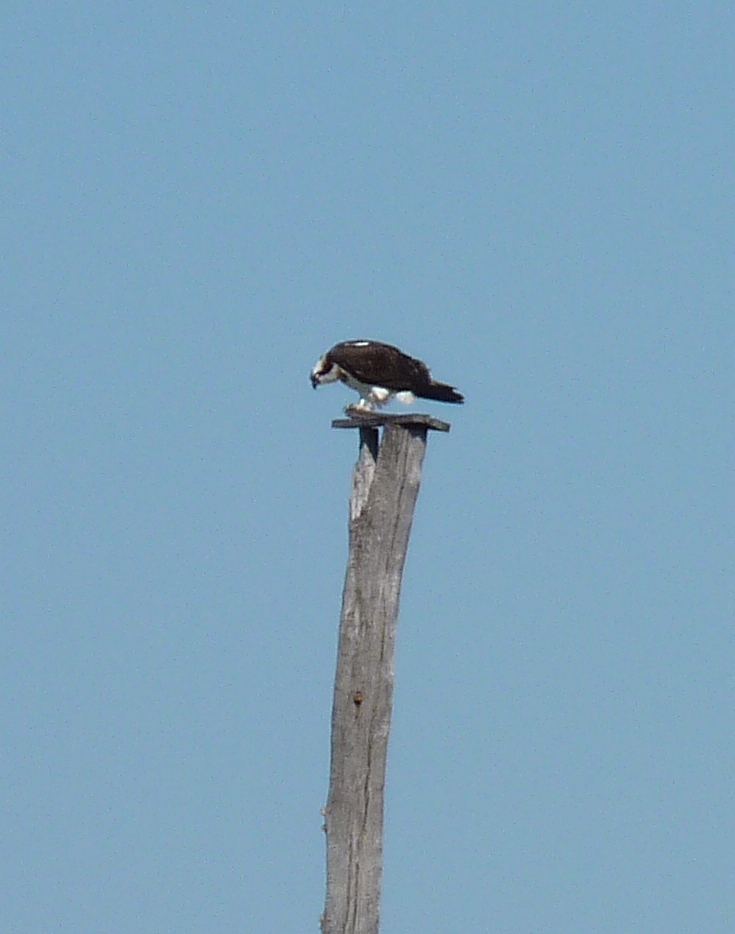
Osprey Aguila Pescadora Pandion haliaetus (PHOTO: John Wainwright)
25th February 2013

A very warm day but the wind had a real chill to it.  As we entered the reserve we saw Cormorants, Jackdaws, Rock Doves, Monk Parakeets and Mallard, while in the small bushes we found Zitting Cisticola, Sardinian Warblers, Black Redstarts and Chiffchaff - the latter being in full song. Above the bushes there were quite a few hirundines including House and Crag Martin and Barn Swallow.

Moving onto the Laguna de la Casilla, here we saw Pochard, Gadwall, White-headed Ducks, Teal, Coot and Little Grebes. Overhead we located  Booted Eagle and three Grey Herons and above the reed beds we saw Red-rumped Swallows and two Sand Martins.

At the next hide - Rio Viejo - lots of Black-winged Stilts, a Redshank and two Greenshanks were noted although not very good views of them, several Little-ringed Plovers, a lone juvenile Greater Flamingo. Teal, Shovelers and Mallard represented the duck family and  a few Goldfinch, Stonechats, Serins and Greenfinches were also seen here.  Crested Larks were in good numbers but very little else about in the rough areas and a Marsh Harrier was seen in the area of the Laguna Grande.

As we approached the Sea Watch area a huge flock of ducks landed about 300metres out at sea these we found to be Pintails  - forty three of them. Two largish flocks - totalling seventy - of Common Scoters were also seen here. A small group of Auduoins Gulls some Black-headed, Yellow-legged and three Lesser Black-backed Gulls were also noted. A sudden movement to the right of the Auduoins and we located a Razorbill and a few minutes later another one.

On the groynes a Little Egret was fishing and over this flew a Great White Egret, small numbers of Little Ringed Plovers with seven Turnstones and along the beach we watched Sanderlings, Crested Larks, three Kentish Plovers, one Dunlin and a few White Wagtails.

We then made our way to the Escodida hide where the chilly wind was blowing directly into our faces we did get White-headed duck, Teal, Shoveler, Moorhen and a few Coots here, and so onto Laguna Grande.

Shoveler Cuchara Comun Anas clypeata on the Laguna Escondida (PHOTO: John wainwright)
 It was very pleasant in this hide as the wind had died down a tad by now and here we picked up a Common Buzzard sat in the bare trees opposite and in the water below us White-headed Duck, Shovelers, Black-winged Stilts and two Yellow-legged Gulls were feeding.

At last, the Osprey Aguila Pescadora Pandion haliaetus on the wing (PHOTO: John Wainwright)
On the islands a lone Spoonbill was seen along with more Grey Herons, a few Wigeon, Cormorants, Black-necked and Little Grebes, a single Grey Wagtail and a Common Sandpiper were spotted on the far mud-bank and in the surrounding bushes were saw Great Tit, Blackbird and Sardinian Warbler. Jenny spotted a raptor flying over the trees this was the Osprey it landed on the tall post and was there for a good twenty minutes before flying out to sea.

A Common Kestrel was seen as we left the reserve.


Check out the accompanying website at http://www.birdingaxarquia.weebly.com for the latest sightings, photographs and additional information.  

Friday, 22 February 2013

Axarquia Bird Group Monthly Visit

Little Owl Mochuelo Comun Athene noctua
Thursday 21 February

It seemed a good idea at the time to visit the old railway track above Ventas de Zafarraya with a follow-on to he woods of El Robledal until we actually arrived!  Passing Barn Swallows, Collared Doves, House Sparrows and Spotted Starlings as we climbed up to the pass I arrived a little early and decided to take a walk up to the tunnel before anybody else was about.  What a mistake to make!  Even with extra layers on it was absolutely freezing in the bitterly cold strong wind.  So, with the arrival of the other eight participants, it was decided to work the opposite way round and visit the woods first where, at least, there would be some shelter.  A question of re-arranging transport then, along with Elena and Steve Powell plus Mary-Ann Murphy from Frigiliana, Marcus and Liz Rootes from Competa, Gery Collins and Louise Gray from Salobrena and Malcolm Austin and myself from Lake Vinuela, the short journey get under way.

No sooner were we making our way along the track tan we had a Black Redstart followed by a Stonechat and couple Serins feeding with a pair of Rock Buntings.  The second car picked up a Magpie whilst we all stopped to admire both a Corn Bunting and Southern Grey Shrike atop neighbouring large bushes.  A Red-legged Partridge "paddled" along at the side of the track but the predominant bird at this point was the Jay with at least four individual s between the main road and the parking area - where logging was under way and much of the usual area being used to deposit the removed pine trees.  A couple of Mistle Thrushes and a single Song Thrush put in an appearance and then it was up and away into the woods to walk an anti-clockwise trail.

In the event, the morning very much turned into a session of passerines or, for some, lots of "LBJs".  First Blue and Great Tits in the presence of many Chaffinches and then both Nuthatch and a small number of Firecrests.  A Green Woodpecker "flashed"  through the back of the trees and then we were finding both Coal and small parties of Long-tailed Tits.  Almost back to the cars and we heard calling then picked up a Crossbill with more Nuthatches along with a trio of Greenfinches.  A distant Short-toed Treecreeper was seen but no sooner had we started to make our way back along the track to take the right-hand turning towards the pantaneta above Alhama de Granada when we stopped to see yet another, closer, Firecrest.  No sooner seen along with a passing small charm of Goldfinches than Mary-Ann looked in the neighbouring tree to identify a lovely Crested Tit.  Whilst watching the bird to see where next it would reappear a Short-toed Treecreeper decided to join in the act and wander up the same tree.  In future visits this tree will hence-forth be known as the "Mary-Ann tree" by way of reference to the area!!!

Firecrest  Reyezuelo Listado Regulus ignicapilla

The track to the above lake produced Wood Pigeons and a female Kestrel but whilst stopping to check out more Goldfinches Steve looked out of the other side of the car where the Chaffinches were feeding and was straight on to a rather lovely Brambling.  Only a small mixed flock but, nevertheless, great to see that we still have a few of these finches with us in Spain prior to their return to Scandinavia.  Finally, another (female) Green Woodpecker crossed the track immediately ion front of us before reaching the water.

The view from the venta side of the pantaneta produced a different set of birds with a handful of Cormorants, a couple of Little Grebes, and a small number of Mallard, Pochard. and Coots. In addition, we had a single Moorhen, White Wagtail and yet more Long-tailed Tits along with a couple of Chiffchaffs and a Blackbird.  Meanwhile, above the water,were scores of feeding Barn Swallows, House Martins and Crag Martins but we were unable to identify either Sand martin or Red-rumped Swallow amongst these birds.

Little Owls Mochuelo Comun Athene noctuas watching you, watching me

Leaving the pantaneta to make our way back to Ventas de Zafarraya for a Menu del Dia and had a quartet of Azure-winged Magpies cross the road when I happened to mention to Steve to slow down as he left the first set of trees as there would be a Little Owl resting on the rock at he bottom on his side of the car.  After much banter and queries as to whether or not I was prepared to put it in writing, we approached the said rock and I said "Stop, there's the Little Owl on the first rock."  Not just one but a pair of Little Owls which, I suspect, use this as their day-time roost, not ten metres from the road.

And with that we headed off for our meal having recorded a very respectable 45 species during the morning.  Nothing at Ventas de Zafarraya so the Choughs, Black Wheatears, Blue Rock Thrushes and Rock Sparrows will have to wait for another day.

Birds seen:
Mallard, Pochard, Little Grebe, Red-legged Partridge, Cormorant, Kestrel, Moorhen, Coot, Wood Pigeon, Collared Dove, Little Owl, Green Woodpecker, Crag Martin, Barn Swallow, House Martin, White Wagtail, Black Redstart, Stonechat, Blackbird, Song Thrush, Mistle Thrush, Chiffchaff, Firecrest, Long-tailed Tit, Crested Tit, Coal Tit, Blue Tit, Great Tit, Nuthatch, Short-toed Tree-creeper, Southern Grey Shrike, Jay, Azure-winged Magpie, Magpie, Spotless Starling, House Sparrow, Chaffinch, Brambling, Serin, Greenfinch, Goldfinch, Linnet, Crossbill, Reed Bunting, Corn Bunting.


Check out the accompanying website at http://www.birdingaxarquia.weebly.com for the latest sightings, photographs and additional information.  

Thursday, 21 February 2013

Red-knobbed Coot, Ferruginous Duck AND then a Long-tailed Duck for good measure

Sunday 17 February

At last time to let readers know about our return journey from the Odial area in Huelva and what a journey it was.  Not so much the dull, overcast sky and the occasional few drops of drizzle , sufficient to require wiper blades at times, but the fact that not one but four "special" birds were seen at our four stops on the way through and out of the Donana National Park.  One would have bee  great but four, almost unheard of!  Indeed, by the time we got back to Casa Collado we had recorded all the expected birds and more with the only "missed" species being the Night Heron.

Azure-winged Magpie  Rabilargo  Cyanopica cyanus

So here we go.   Having already seen a Song Thrush and small number of Blackbirds on the lawn behind the bedrooms, we were away by 9.30 and heading for the motorway to Huleva from where we crossed the river Odiel by the old bridge and then took the coastal road to Matalascanas and so to El Rocio.  The first Azure-winged Magpies were seen during this early part of the day and then we stopped at the small pool just east of the "gas works" to pick up a Purple Swamphen, Grey Heron and a couple of Common Coots.

White Storks Ciguena Blanca Ciconia ciconia above the Information Centre at the Acebuche

Next it was to the Donana's Acebuche Centre (recording Spotless Starlings, a Raven and Collared Doves) where loads of both (common) Magpies and their Azure-winged Magpie cousins were encountered.   A pair of White Storks had set up home immediately above the Visitors' Centre and, with both Crested Lark and Robins about we made our way to the first two hides.  Another Purple Swamphen was seen along with Little Grebe, Moorhen, Pochard and Mallard and, just to keep us on our mettle, a pair of Glossy Ibis flew over and landed in the watery grasses to the left.
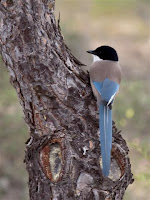
Then the first of our quartet of special birds.  Arriving at the second hide a rather stunning Yellow-crowned Bishop was posing on a tall reed immediately in front f the hide.  I should have been happy with that sighting but there was to be more to follow.

Deciding to make straight for the main lake at El Rocio, we passed a couple of very wet-looking Buzzards along with Stonechats and Hoopoes, not to mention numerous Magpies and Spotless Starlings, and stopped for a shirt while at the hide overlooking the southern end of the laguna.  Half-a-dozen Snipe were feeding in front whilst on the water itself were numerous Black-tailed Godwits, Black-winged Stilts, Little Grebe, many Spoonbills, Mallard, Shoveler, Teal, Flamingos and Black-headed Gulls.  Barn Swallows were feeding over the water and then we spied a few Pintails along withe a number of White Wagtails.
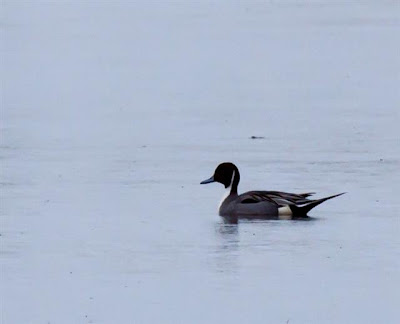
Pintail Anade Rabudo Anas acuta at El Rocio

On to the main Information Centre manned by the SEO lady where she duly pointed out the resting Spanish Imperial Eagle.  This end of the water also held both Grey Heron and Little Egret whilst Cattle Egrets were feeding on the  grass behind us.  A single Avocet was also recorded along with a good number of Lapwing and a small party of Jackdaws.  Enquiring about the possibility of Marbled Teal and Red-knobbed Coots, I was told that the lake below the Dehesa de Abajo would be our most likely opportunity and that there was/had been a rather special bird seen here.

Nothing for it but to make our way out of the National Park via the side roads and through that strange village of Isla Menor (why does this small village have a single petrol station that always seems to sell the cheapest fuel in the Region?) recording numerous White Storks and then loads of Glossy Ibis, Little Egrets, Herons, the occasional Great White Egret and then a single Squacco Heron.  In addition this journey from El Rocio to the Venta del Cruce also produced Serin, Goldfinch, Corn Bunting and Southern Grey Shrike.  Perhaps best of all, we even had a handful of Black Storks and both Hen and Marsh Harriers.  But being already after 2.30 we decided to stop for a meal before turning left and heading for the lake at Dehesa de Abajo.
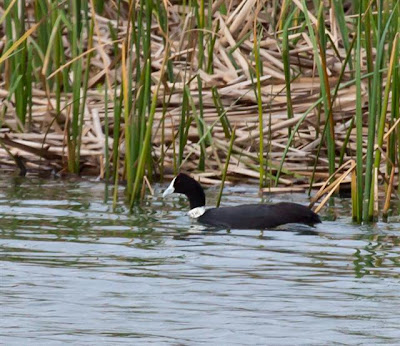
Red-knobbed Coot Focha Moruna Fulica cristata at Dehesa de Abajo

By 3.45 we had passed scores of occupied White Stork nest and arrived at the lake where, immediately, we encountered three Red-knobbed Coots, two wearing numbered neck bands for easy distant identification.  Not too many ducks appeared on the water but Little, Great Crested and Black-knecked Grebes. and Chiffchaffs feeding in the lakeside vegetation.  A Danish couple who we had encountered the previous day in the Odiel Mashes stopped to enquire about sightings of Marbled Teal and we had to rplay in the negative but did inform them that the SEO rep had mentioned a very rare duck had been seen.  Half an hour later we received a signal from the far end of the lake that something had been seen so moved our car along the road to join them.  Imagine our surprise when we, too, sighted what was taken for a female Long-tailed Duck.  Lots of distant photographs and then the bird took off but, surprise number two, instead of tourning towards the back of the lake it swung around and landed in front of us, not thirty metres away.  However, the light was by now rapidly worsening and the bird was in the shadow of the small island opposite.  nevertheless, we had cracking views and this became out third success of the day.
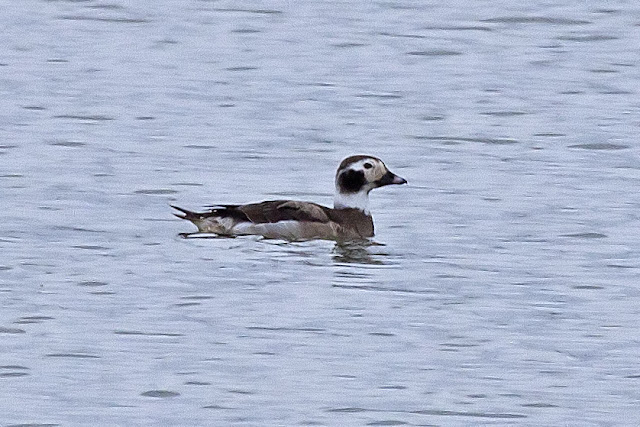
(Probable) First winter male Long-tailed Duck Pato Havelda Clangula hyemalis at Dehesa de Abajo

But there was more to come.  Within a very short time we even managed to locate a female Ferruginous Duck with a small mixed party of Pochards, Red-headed Pochards and Shovelers.  And we even had a pair of Tufted Ducks, yet another very rare species for this part of Andalucia.  Absolutely marvellous to have recorded four great birds in one day and what does that say about species such as  Glossy Ibis,  Great White Egret, Squacco Hern and Black Stork?


Time to set off for home and a promised stop for a coffee at the first motorway service station after leaving Sevilla.  Seeing the half dozen Red Kites over the motorway near the rubbish dump just east of Sevilla was expected but what did come as a little bit of a surprise was to see that they had been joined by as many as a dozen Black Kites and at least one Booted Eagle.  What a way to end the day and a final tally of 61 species.


Birds seen:
Mallard, Shoveler, Pintail, Teal, Red-crested Pochard, Pochard, Tufted Duck, Long-tailed Duck, Little Grebe, Great Crested Grebe, Black-necked Grebe, Cormorant, Squacco heron, Cattle Egret, Little Egret, Glossy Ibis, Great White Egret, Heron, Black Stork, White Stork, Spoonbill, Flamingo, Red Kite, Black Kite, Marsh Harrier, Hen Harrier, Spanish Imperial Eagle, Booted Eagle, Buzzard, Kestrel, Moorhen, Purple Swamphen, Coot, Red-knobbed Coot, Black-winged Stilt, Avocet, Lapwing, Snipe, Black-tailed Godwit, Black-headed Gull, Collared Dove, Hoopoe, Crested Lark, Barn Swallow,White Wagtail, Robin, Black Redstart, Stonechat, Blackbird, Song Thrush, Chiffchaff, Southern Grey Shrike, Azure-winged Magpie, Magpie, Jackdaw, Raven, Spotless Starling, House Sparrow, Serin, Goldfinch, Corn Bunting and Yellow-crowned Bishop.
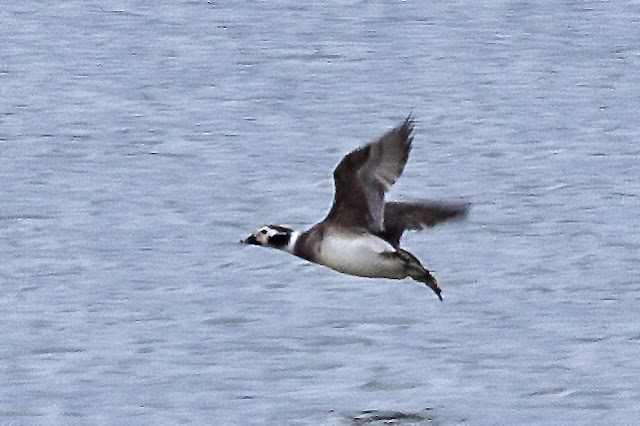
Good-bye to the Long-tailed Duck.  When will we meet again - anywhere?


Check out the accompanying website at http://www.birdingaxarquia.weebly.com for the latest sightings, photographs and additional information. 

Tuesday, 19 February 2013

Odiel Marshes (Marismas del Odiel)

Saturday 16 February

Having had a super birding day on the way down to our hotel in Nueva Portil, now was the day to travel the short distance up the Information Centre at the top end of the nature reserve serving the Odiel Marshes for the monthly meeting of the Andalucia Bird Society.  Imagine our surprise, therefore, when we travelled over for the 9.30 stat in quite thick fog!  However, the day was and remained calm and as we had to wait about fifteen minutes for the remaining party of four the fog had lifted sufficiently not to spoil our start never mind the rest of a very full day.  A very successful day at that with over 80 species recorded by the group led by Manu.  Indeed, apart from all the returning White Storks we even had a Great Crested Grebe in the foggy waters as we joined the motorway.

Great White Egret Garceta Grande Egretta alba

The fit our or so was spent checking out the river and waters around the centre as the tide slowly receded revealing the food-rich mud and all the various waders feeding there on.  Curlew and Whimbrel were seen together as were both Black and Bar-tailed Godwits.  Add on Avocet, Dunlin, Ringed Plover, a single Curlew Sandpiper, Redshank and Grey Plover and we were well and truly in amongst the birds.  Flying over the area we had Cormorants, Black-headed and Slender-billed Gulls along with a Sandwich Tern.  The neighbouring small pond contained a range of ducks including Shoveler, Mallard, Gadwall and Teal plus, of course, both Moorhens and Coots.  Needless to say, there were also Little Grebes and Black-winged Stilts whilst both Kingfisher and Cetti's Warbler flew across from the hide to this same small pond.

Moving off down towards the lighthouse there many regular stops to check out the waters on both sides of the road during which we added Great White Egret, Little and Cattle Egret, White Stork, Black-necked Grebe, Heron, Sanderling and Kentish Plover.  One particular stop revealed a small party of Spanish Sparrows. During this part of the drive we also recorded Chiffchaff, Corn Bunting, Goldfinch and Hoopoe whilst, at the back of the large pool to the left in addition to a score of Sponbills was a solitary Caspian Tern.

One of the beauties of this area is the likelihood to see some glorious raptors and we were not to be disappointed.  First a resting Osprey and then both a female Hen Harrier and at least a trio of Marsh Harriers including a magnificent adult male.

Distant Osprey Aguila Pescadora Pandion haliaetus

Then it was back to the Information Centre for our picnic lunch before entering the private part of the site to reach the freshwater pool.  This necessitated the us of Manu's car only so whilst the first half of the party were driven over a handful of the thirteen visitors started to walk the track as we awaited Manu's return to collect us.  We may have had both a Dartford Warbler and a Bluethroat but the other group managed to record both Wood Lark and Meadow Pipit to add to the group's combined total.  On arrival at the final turning point we had an absolute mass of small waders including many of those already seen but there was also a pair of Little Stint and both Osprey and Marsh Harrier drifted over.  Indeed, whilst waiting for we in the second party, the others had a magnificent view of a fishing Osprey which then disappeared with its well-earned afternoon meal.  Finally, on to the last, fresh water, pool where, fling overhead we had both Barn Swallow and House Martin.  Another Osprey was spotted on the far side and a Green Sandpiper worked the edge of the water below us.

Our final stop of the day was at the lake in El Portil.  Here we had Black-necked Grebe, Pochard, Shelduck and Mallard with feeding Barn Swallows, Sand Martins and House Martins above.  But the illusive Red-crested Pochards and Tufted Ducks could not elude us.  The nearby small pine wood also added Black Redstart, Robin and Serin to the day's total.

Spoonbill  Espatula Comun  Platalea leucorodia

Also recorded during the day were Yellow-legged and Lesser Black-backed Gulls, Reed Bunting, Azure-winged Magpie, White Wagtail, Stonechat, Blackbird, Song Thrush and Spotless Starling with earlier sightings of Oystercatcher, Southern Grey Shrike, Sardinian Warbler and Snipe. However, perhaps pride of place should go to the dozen Stone Curlews seen on a bank between the lagoons just after crossing the bridge near the Information Centre at the start of our journey.

All in all a marvellous day with special thanks to local member Manu Mojarro who organised and led the day.


Check out the accompanying website at http://www.birdingaxarquia.weebly.com for the latest sightings, photographs and additional information.