Monday, 10 August 2020

Rutland Water

Manton Bay Ospreys Pandion haliaetus

 Sunday 9 August

Missed the start of the GP from Silverstone so went for a late afternoon visit to Rutland Water so I could be back in time for the edited highlights and, in the meantime, not be aware of the race outcome.  Still warm and sunny with only a few light clouds in the blue sky and almost free of any breeze.  Should be perfect birding weather and arriving around 5pm just about all the day visitors had now departed.  Approaching the site the usual flurry of Wood Pigeons and Carrion Crows along with a couple of Magpie so decided to start at Manton Bay.  Parking on the wide path on the upstream side of the bridge over the ingress I hoped that the Osprey might in in full view from my advantage point.

Ospreys at nest with Mute Swans Cygnus olor in background

And indeed they were though the mass of ducks seen last week had now dispersed further into the main waters.  Three Ospreys resting on the pole next to the nest site and the enlarged photo revealed that a further youngsters was in the nest.  (This nest has, once again, produced a total of four young and all are about to fledge and tour the water before their eventual departure to African shores.)  However, in addition to five nearby Little Egret and a family of Carrion Crows, at least ten occupied Great Crested Grebe nests were seen along with more individuals further out along with Mallard, the odd Lapwing and a Heron.

Little Egret Egretta garzetta

Almost as far away as the Shallow Water Hide the large bare tree in the water held a large colony of resting Cormorants and, naturally, there were also Coots to be seen.  Similarly, not long before I recorded both Canada and Greylag Geese whilst most of the Mute Swans were to be seen in the far distance.

The main Cormorant Phalacrocorax carbo flock

Back to the reserve proper, passing both Collared Dove and Jackdaw as I entered, and a visit to the Feeding Station which was now becoming quite active as smaller birds came to fill up ready for the coming evening.  Still lots of both Blue and Great Tits, mainly youngsters, but also a couple of Robin, a pair of Blackbirds, three Chaffinches and a quartet of Dunnock.

Dunnock Prunella modularis

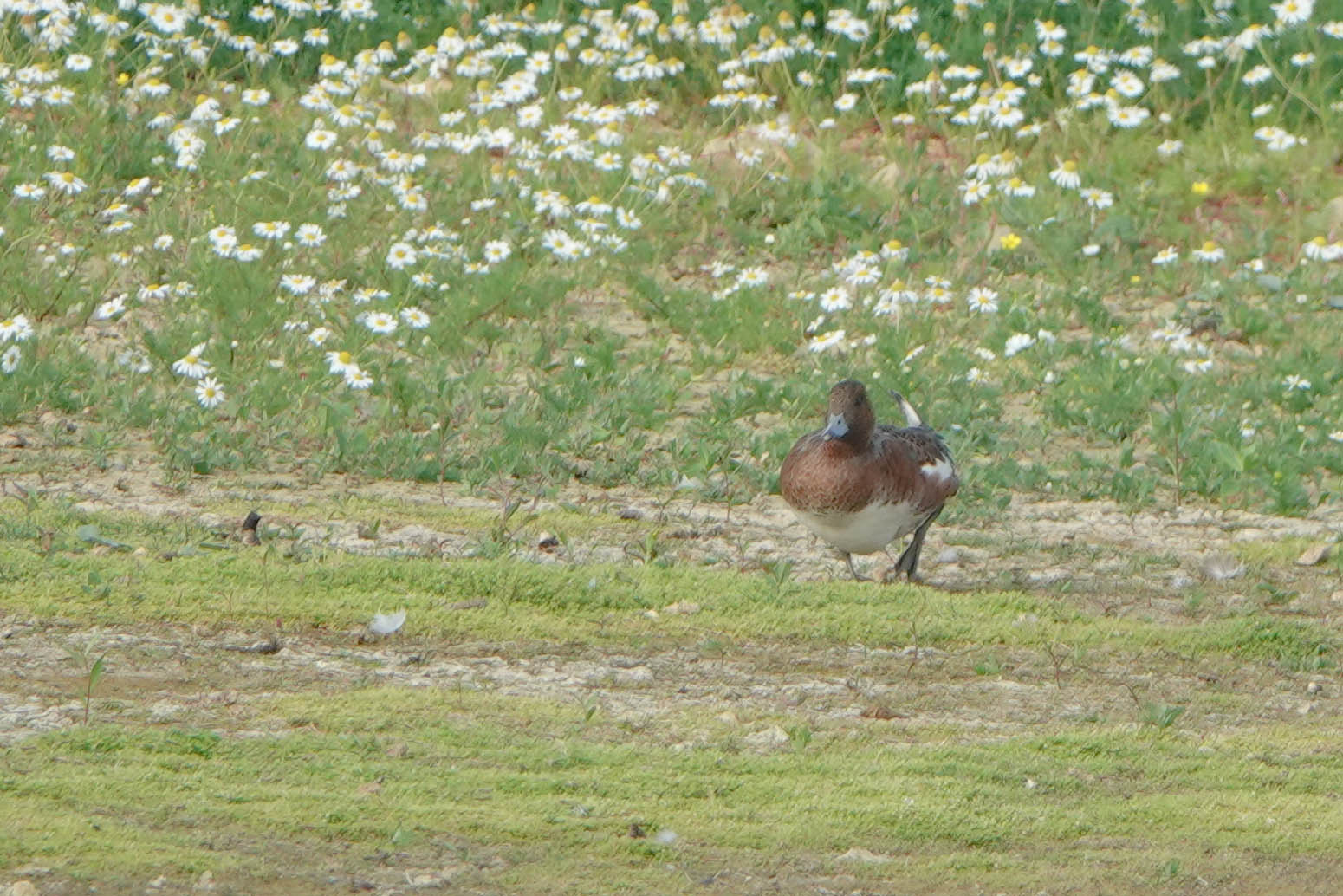
A short stop at the Redshank Hide produced both Common Tern and Sand Martin and the next stop, Osprey Hide, had a departing Rock Dove along with a Great White Egret.  So on to Lagoon 4 and the Sandpiper Hide.  Upon entering lots of Greylag Geese to be seen and they seemed to be settled in for the evening.  The middle island held a pair of immature Great Black-backed Gulls and the here also Black-headed Gulls in front of me.  Away to the eft a large mixed flock of gulls, mainly Lesser Black-backed but also a number of Great Black-backed Gulls.  However, immediately opposite the hide was a single Wigeon confirming that these birds are gradually making their way back for their winter holidays.  In addition a good number of Lapwing and more Little Egrets were to be seen.

Wigeon Anas penelope

Next to my final hide on the north side of the reserve where I entered Redshank Hide to find another local birder in attendance.  Not too many Common Terns to be seen along with both Mallard and Lapwing on the island in front of the hide.  Just beyond the island a good-sized flock of Tufted Duck. To my left two Great White Egrets and a trio of Little Egrets and then a first Teal of the winter and way out to the far side a large flock of Pochard.  Informed by my fellow birder, I was then also to find the visiting Black Tern as it patrolled the waters just beyond the narrow island.  A Moorhen paddled its way across to the island and on the far left a sleeping Greenshank.  Finally, a small number of Gadwall and my companion informed me that there was a good variety of waders in Lagoon 1 that could be seen from the Mallard Hide.  Banking on the motor racing programme starting with all sorts of chat and review before the race itself, I thought I had just about enough time for a short visit before heading home.  Lots more of the same to be seen, including another three Great White Egrets, but nothing new apart form the large Starling flock.

Great White Egrets Egretta alba along with a Canada Goose Branta canadensis

Birds seen:

Greylag Goose, Canada Goose, Mute Swan, Gadwall, Wigeon, Mallard, Pochard, Teal, Tufted Duck, Great Crested Grebe, Cormorant, Little Egret, Great White Egret, Heron, Osprey, Moorhen, Coot, Lapwing, Greenshank, Black-headed Gull, Lesser Black-backed Gull, Great Black-backed Gull, Common Tern, Black Tern, Rock Dove, Wood Pigeon, Collared Dove, Sand Martin, Dunnock, Robin, Blackbird, Blue Tit, Great Tit, Magpie, Jackdaw, Carrion Crow, Starling, Chaffinch.

Common Terns Sterna hirundo at nest boxes

Greylag Geese Anser anser preparing for evening roost

Little Egret Egretta garzetta

Check out the accompanying website at http://www.birdingaxarquia.weebly.com for the latest sightings, photographs and additional information

Saturday, 8 August 2020

Frampton Marsh, Boston

Saturday 8 August

Another warm, sunny start to the day with almost clear blue skies and a gentle breeze but liable to some stiff gusts.  At RSPB Frampton Marsh by 8.30 to see the latest arrivals as autumn migration starts to get underway but with the added pleasure of being accompanied by Jenny, albeit this somewhat restricts last minute changes to set plans and rules out deviations on the way home!

Both Kestrel and Collared Doves as I approached the site and then welcomed by the usual Wood Pigeons, House Sparrows and a couple of Carrion Crows.  On this occasion straight to the bottom car park near the high bank and looking south over the large area of wet grassland immediately made contact with the Lapwing.  But not just Lapwing.  It would appear that the first of the wintering Golden Plover have arrived with about a score in sight.  As I scoped and made use of the camera a small charm of Goldfinch made their way along the thistles and away to my right.

Golden Plover Pluvialis apricaria

Checking the grassland and pools to the north inside the boundary fence, a handful of Little Egrets and a large resting flock of Black-headed Gulls.  Close by a single Greenshank and then a Black-tailed Godwit.  As a lone Moorhen made its way towards the water I also picked up Mallard and a single Dunlin along with a good number of Avocet.  Meanwhile, a steady passage of Barn Swallows overhead and to the far north of the reserve a murmuration of hundreds of Starlings creating a massive cloud in the sky.  Only a handful of Greylag Geese as we made our way to the end of the path and up onto the high bank.

Black-headed Gulls Larius rudibundus with Little Egret Egretta garzetta (front left)

Looking down on the small pools from above we could now see more of both the local Avocets and Greylag Geese.  The nearest pool held a quartet of Curlew Sandpipers and a single Ruff.  With the Avocets a juvenile Shelduck and the adult found further away with another couple of youngsters.  A Reed Warbler dashed across the pool from one set of reeds to another and Jenny noticed a Reed Bunting on the fence below.  Returning to the path below, the stream alongside the high bank held a quartet of Ruff plus Avocet and single Oystercatcher.

Curlew Sandpipers Calidris ferruginea

So back to the main car park and chance to check out the main water from the picnic area, the Visitors Centre still being closed.  Over twenty Spoonbill (highest count was 27) in sight along with hundreds, maybe thousands, of both Black-tailed Godwits and Dunlin.  Immediately in front of me on the beach of a grassy island a wandering Pied Wagtail and foraging at the edges both Greenshank and Redshank.  A Snipe was observed and then the Coot before returning the larger scope to the car and making my way to the Reedbed Hide with the smaller portable scope.  Once settled in the hide a good view of the long-staying Whooper Swan along with many more Black-tailed Godwits and the next island holding a handful of Cormorant.  
Whooper Swan Cygnus cygnus with Black-tailed Godwits Limosa limosa

In the distance the only Heron of the morning as both Greylag and Canada Geese paddled by in front of me.

Greylag Goose Anser anser

No sooner had a handful of Wigeon moved across the water nearby than a couple of Common Tern flew over behind me as I made my way back to the car park.  Re-joining Jenny she noted the high raptor and I was able to identify a passing Marsh Harrier.  We finally found our first Mute Swan of the morning and at the entrance to the reserve the Barn Swallows were beginning to start collecting together on the overhead wires but, most strangely, also a single Yellow Wagtail (suffering from an identity crisis!!!) and even a few Sand Martins had joined the band of Barn Swallows.

Barn Swallows Hirundo rustica starting to flock-up 

Our last port of call was to take the narrow farm track down to the back of the southern end of the reserve in search of the summering Turtle Doves.  No luck on this occasion but the meadow in front of their favoured site held a Meadow Pipit  and on the other side of the path, on the field in front of the large irrigation pool, a couple of Sky Larks and a trio of Tufted Duck on the water itself.  So began the journey back to Stamford with a Blackbird in Frampton village and near Market Deeping both a hunting Red Kite and a trio of Jackdaws.
One of very many Lapwing Vanellus vanellus

Birds seen:

Greylag Goose, Canada Goose, Mute Swan, Whooper Swan, Shelduck, Wigeon, Mallard, Tufted Duck, Cormorant, Little Egret, Heron, Spoonbill, Red Kite, Marsh Harrier, Kestrel, Moorhen, Coot, Oystercatcher, Avocet, Golden Plover, Lapwing, Curlew Sandpiper, Dunlin, Ruff, Snipe, Black-tailed Godwit, Redshank, Greenshank, Black-headed Gull, Common Tern, Wood Pigeon, Collared Dove, Sky Lark, Sand Martin, Barn Swallow, Meadow Pipit, Yellow Wagtail, Pied Wagtail, Blackbird, Reed Warbler, Jackdaw, Carrion Crow, Starling, House Sparrow, Goldfinch, Reed Bunting.

Black-tailed Godwit Limosa limosa

The main Spoonbill Platalea leucorodia flock


Check out the accompanying website at 
http://www.birdingaxarquia.weebly.com for the latest sightings, photographs and additional information

Wednesday, 5 August 2020

Fenland Washes

Wednesday 5 August

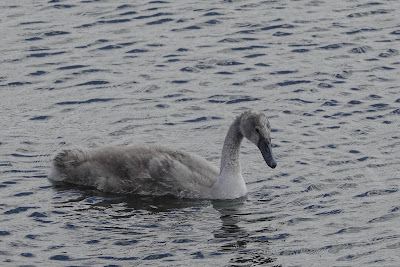
If Monday is "Washing Day" the Wednesday, today, was "Washes Day!"  Lovely blue sky with some broken cloud and very warming sunshine as I set out for Eldernell near Whittlesey for a visit to the Nene Washes.  Still a very strong breeze when I arrived at 9.30 but standing on the bridge near the car park I had a lovely view of a distant quartering Marsh Harrier.  Lots of Carrion Crows and Wood Pigeons about and then the first of the Barn Swallows feeding over the stream as they made their way westwards.  On the stream itself a pair of Mute Swans with a single cygnet and lower down the stream I was to find another two pairs, the first with three well-grown cygnets.

Mute Swan Cynus olor family
Mute Swan Cygnus olor with family

Searching the fields it was not so much the second, closer Marsh Harrier but the pale "bump" above the tall grasses that drew my attention.  With the scope trained on the spot the bump finally revealed itself as the neck and head of a Common Crane.  Nothing before and now two individuals within days of each other.  Unfortunately, the wind was too strong to take the distant photograph with my camera.

Common Crane Grus grus
The walk on down the stream revealed both a Mallard and a Coot on the pond on the other side of the high bank and as I turned for the return walk a quintet of Lesser Black-backed Gulls flew over towards the south and passed a single Cormorant flying in the opposite direction.  Reaching the car park for a final looked over the fen with its lush green grasses and feeding cattle, another handsome male Marsh Harrier followed by a flock of almost fifty Jackdaws.

With so little to see I decided to move across to the RSPB Ouse Washes near Manea, March, also in Cambridgeshire, and recorded both Pheasant and Kestrel on the way. Only 45 minutes away and really looking forward to visiting the hides and seeing some good birds, so you can imagine my great disappointment to arrive and not only find toilets and Reception closed but also all hides and the paths leading to same.    Maintenance work on the high banks so no chance of even getting a view of the area.  Therefore, left with the sighting of the usual Wood Pigeons and Carrion Crows along with a small number of House Sparrows and a calling Tree Sparrow.  However, the Barn Swallows were starting to flock up with a maximum of eighteen on the wires above the entrance.  And as I was to see depart a male Blackbird fly across the shaded car park.

What to da as still not 2 o'clock?  The Welney Wetland Centre seemed a good option being only about thirty minutes away so back on the road and the temperature now up into the high twenties and very humid.  Upon arrival, yet more disappointment.  Well into the afternoon and the reserve due to close about 4 but still an entrance fee of £6.90!   Whilst I contemplated the idea looking out at the almost dry scrapes below I thought I might be better off making my way back to Stamford and get this report completed today rather than tomorrow.  However, looking through the window I did note the eight Redshank below and both Mallard and Moorhen feeding on the droppings below the feeders which hosted three House and two Tree Sparrows.  Also nearby both Wood Pigeon and Collared Dove and a large flock of Starlings gorging themselves on the ripening blackberries.  A pair of juvenile Pied Wagtails were also present near the scrape.  Add on another Marsh Harrier and a couple of Carrion Crows and my fifteen minutes on site had produced 11 species!

So, very few birds seen but, on the other hand, a delightful tour of rural Cambridgeshire with some lovely villages and all looking very healthy.  Considering I was in "proper" fenland, readers will not be surprised to hear that nearly every road ended with the name "Drove" and I was forever driving along narrow, perfectly straight lanes for miles at a time and often more undulating than a sheet of corrugated cardboard!  So, so different from winter visits when the fields are flooded and masses of wildfowl to be seen.

Birds seen:
Mute Swan, Pheasant, Cormorant, Marsh Harrier, Kestrel, Moorhen, Coot, Crane, Redshank, Lesser Black-backed Gull, Wood Pigeon, Collared Dove, Barn Swallow, Pied Wagtail, Blackbird, Magpie, Jackdaw, Carrion Crow, Starling, House Sparrow, Tree Sparrow

Check out the accompanying website at http://www.birdingaxarquia.weebly.com for the latest sightings, photographs and additional information

Sunday, 2 August 2020

Willow Tree Fen and Baston Gravel Pits

Sunday 2 August

Up at the (almost) crack of dawn and over to Willow Tree Fen  for a "third time lucky" chance of seeing the Cranes which have bred in Lincolnshire for the first time in over 400 years.  A lovely clear and approaching sunny start but I must admit I had not expected it to be so cold following the recent heat wave!  Looking quiet when I arrived at 6.45 but soon noting both the local Wood Pigeons and Collared Doves.  On the recently harvested meadow a number of Carrion Crows were already  feeding and a couple of Magpies soon put in an appearance.

Brown Hare Lepus europaeus

Looking right I saw the approaching adult female Marsh Harrier only a few minutes after a juvenile had landed at the back of the reserve in front of me viewing from the footbridge entrance to the site.  Suddenly, almost immediately in front of me, a  Grey Partridge moved to give itself away behind a clump of dry grass and seemed to be content to remain there for almost ten minutes.  No sooner had I seen a Brown Hare Lepus europaeus  cross the adjacent track than I found three more on the field away to my right.  And a fifth individual also turned up a little later very close to the resting place of the above partridge.  Also on the field lovely to see the arrival and feeding of two small flocks of Stock Dove making a total of 39 individuals.  A Herring Gull flew over at the back following the course of the River Glen, then a Cormorant whilst nearer to me a pair of cock Pheasants made their way along the back of the harvested meadow.  A couple of House Sparrows were active in the nearby vegetation.  Meanwhile, in the Counter Drain flowing under the bridge, an adult Moorhen to my right and a juvenile to my left.

Grey Partridge Perdix perdix ( Note surviving chick of 8 to the right)
No sign of the Cranes so decided I would wait a further ten minutes till 8 o'clock then wander back to the Baston Gravel Pits.  With less than five minutes to go the duty ranger pointed out one of the  Cranes as it it flew along the back of the reserve giving that very familiar silhouette that we see during winter months in Spain.  At last, and third time lucky, I had seen my first British Crane.

Willow Tree Fen seen from the entrance.  The Crane Grus grus flew along the back from left to right
So, with a contented smile on my face, I made my way back to the nearby Baston Gravel Pit passing a dozen resting Little Egrets and a pair of Mute Swans plus a Kestrel on the roadside wires.  Lots to see and the bulk of the birds were on the eastern lake including many Greylag Geese and Mute Swans.  Closing scrutiny also produced Tufted Duck, Coots and Moorhen along with Black-headed Gulls.  The odd Carrion Crow was seen near both waters with the western lake producing Mallards, Little Egret and a Little Grebe.  Also present were both Lesser Black-backed and Herring Gulls.

The nearby fields and wires also produced Rooks and Lapwing along with Starlings and Barn Swallows whilst in a sand pit  a short distance up the road, in addition to more gulls, I also found a pair of Green Sandpipers.

A few of the 39 Stock Doves Columba oenas feeding at Willw Tree Fen

Birds seen:
Greylag Goose, Mute Swan, Mallard, Tufted Duck, Grey Partridge, Pheasant, Little Grebe, Cormorant, Little Egret, Marsh Harrier, Kestrel, Moorhen, Coot, Crane, Lapwing, Green Sandpiper, Black-headed Gull, Lesser Black-backed Gull, Herring Gull, Rock Dove, Stock Dove, Wood Pigeon, Collared Dove, Barn Swallow, Magpie, Rook, Carrion Crow, Starling, House Sparrow.


Check out the accompanying website at http://www.birdingaxarquia.weebly.com for the latest sightings, photographs and additional information

Rutland Water

Willow Tit Poecile montanus 
Saturday 1 August

Another lovely sunny day promised so, by popular request, took Jenny and her visiting guest, Welsh Debbie from Leeds, over to Rutland Water for the morning.  Only broken cloud with much blue sky and warm sunshine but still a good breeze when exposed in the open.  Today was something of a record.  My first visit to Rutland Water in twenty-five years when I did NOT see a single Jackdaw!

A short stop at the Feeding Station before buying our entry tickets produced  number of Blue and Great Tits along with both Dunnock and Robin.  A Collared Dove rested on the far feeder tree and a couple of Wood Pigeon dropped in. But then, possibly, the bird of the day with the arrival of a Willow Tit.  One hungry tit as the bid made frequent visits to the feeders.  Indeed, it was still visiting when we made a return visit at the end of the visit before taking the car for the extended journey home.  On this latter occasion we also managed to add both Chaffinch and House Sparrow.

Willow Tit Poecile montanus 
Then off to the north with a first stop at the Redshank HideCrow, Mallard, Cormorant, Coot, Tufted Duck, Barn Swallow and Sand Martin added to the list followed by Great White and Little Egrets before taking the woodland track via Grebe, Canada Goose and Heron noted, and Osprey Hides to Lagoon 4 and the Sandpiper Hide.

Black-headed Gull Larus ridibundus with Lapwing Vanellus vanellus in front
Once safely ensconced in the hide a good selection of birds both in front of the hide and across the various islands.  Lots of Coots and Black-headed Gulls along with Mallard and a few Gadwall.  a good number of Mute Swans and this water held the main Greylag Geese flock.  In addition to the Black-headed Gulls in front of us, away to the left a number of Great Black-backed Gulls and even some Lesser Black-backed Gulls.  More Little Egrets and at last a selection of waders.  In addition to the many Lapwings we also noted a couple of Oystercatcher and both Little and Greater Ringed Plovers.  At the far end of island 4 was a single Greenshank.  A juvenile Pied Wagtail was also working the same area as the plovers.  Just the one Moorhen but we did have some fishing Common Terns to prepare us for the next hide.

Common Tern Sterna hirundo
So onto the Shoveler Hide overlooking lagoon 3.  Here we found very many Tufted Ducks plus a couple of Pochard and nearer to the hide on the island immediately in front also the remnants of the Common Tern colony, Coot, Mallard and Lapwing.  To our left a pair of Green Sandpipers were foraging and slightly further away a handful of Little Egrets along with a second Great White Egret.

Great White Egret Egretta alba with Little Egret Egretta garzetta in front and Common Tern and Black-headed Gull 
A few Great Crested Grebes were seen from the Buzzard Hide along with a rapidly disappearing, low Osprey; just the briefest of views.  At the far end of this track at the Lapwing Hide, overlooking the main expanse of the South Arm, there must have been hundreds of Tufted Duck along with more Great Crested Grebes, Canada Geese and Mute Swans.

A pair of Mute Swans Cygnus olor with their cygnet below
Add caption


And so back to the Feeding Station and car park but not before taking advantage of a visit to the observation room at the Visitors Centre overlooking lagoon 1.  Lots more of the same recorded, including more Cormorants, Moorhen, Coots, Tufted Ducks, Heron and Great White Egret plus a couple of Barn Swallows.

Osprey Pandion haliaetus guarding two of its four chicks
A stop at the the roadside near the water ingress point at Manton Bay was very productive.  Not so much the number of Great Crested Grebes and Little Egrets but the view of the Osprey nesting platform which held four chicks and an adult keeping watch from the camera mounting above the nest.

Not just Ospreys but a whole bunch of  Pochards Aythya ferina, Tufted Ducks Aythya fuligula and Great Crested Grebes
Finally, a very quick stop at the Lyndon Visitors Centre and a walk through the busy picnic field at Normanton before continuing on our way back to Stamford.  And looking over the fields to Belton house the sight of a pair of soaring Red Kites and a single Buzzard.  Great way to spend the morning and with a total of 40 species.

Bird seen:
Greylag Goose, Canada Goose, Mute Swan, Gadwall, Mallard, Pochard, Tufted Duck, Great Crested Grebe, Cormorant, Little Egret, Heron, Great White Egret, Osprey, Red Kite, Buzzard, Moorhen, Coot, Oystercatcher, Little Ringed Plover, Ringed Plover, Lapwing, Greenshank, Green Sandpiper, Black-headed Gull, Lesser Black-backed Gull, Great Black-backed Gull, Common Tern, Wood Pigeon, Collared Dove, Sand Martin, Barn Swallow, Pied Wagtail, Dunnock, Robin, Willow Tit, Blue Tit, Great Tit, Carrion Crow, House Sparrow, Chaffinch.


Check out the accompanying website at http://www.birdingaxarquia.weebly.com for the latest sightings, photographs and additional information

Friday, 31 July 2020

More Fenland Birding

31 July 2020

Having taken Jenny over to her friend's house in Langtoft so that the ladies might enjoy a day's shopping at Springfields, Spalding, I thought, why not?  So leaving Langtoft I headed over to Willow Tree Fen reserve, covering the county lane journey over what can only be described as "corrugated roads" and arrived fifteen minutes later including a couple of stops for road works.  Lovely to meet an old friend on "guard duty" not having seen terry for probably 25 years.  Terry had seen the Cranes when he first arrived at 7 0'clock but not seen since.

Red Kite Milvus milvus

During my short stay at the reserve entrance I recorded a couple of Marsh Harriers and a pair of Kestrel.  Given that I had seen a Buzzard atop a pole as I headed past Baston Fen and recorded a Red Kite approaching Baston on my return journey less than two hours later, a quartet of raptors was most encouraging.  Also seen was a pair of Moorhen in the Counter Drain where the entrance bridge is sited and very many Rooks, Crows and Jackdaws.  However, perhaps the best sighting was that of a Grey Partridge flying over the area used by the Cranes.  naturally, there were many Wood Pigeons and also seen were Collared Doves and House Sparrows.

Black-headed Gulls Larus ridibundus
Making a very short stop at Baston Gravel Pits on the return journey all seemed very quiet and relaxed as the temperature soared; too hot really for serious birding, especially where there was no cover from the blazing sun.  A Cormorant flew over the waters as di some of the local Black-headed Gulls.  Whilst a few were noted on the water the majority were in huge flocks feeding on the recently harrowed fields.  Alongside the gulls, lovely see the flock of well-over a hundred Lapwings.

Lapwing Vanellus vanellus

On the water a couple of score of Mute Swans and at least six Little Egrets.  The limited number of ducks were made up of Mallard and Tufted Ducks and accompanied by a good number of Coot but only the occasional Moorhen.  Similarly, there were Starlings on the wires and a few Jackdaws near the cottage whilst at the back of the water a small flock of Greylag Geese and a handful of Herring Gull to accompany the greater number of Lesser Black-backed Gulls.

Mute Swan Cygnus olor

Birds seen:
Greylag Goose, Mute Swan, Mallard, Tufted Duck, Grey Partridge, Cormorant, Little Egret, Red Kite, Marsh Harrier, Buzzard, Kestrel, Moorhen, Coot, Lapwing, Black-headed Gull, Lesser Black-backed Gull, Herring Gull, Wood Pigeon, Collared Dove, Barn Swallow, Jackdaw, Rook, Carrion Crow, Starling, House Sparrow.

Check out the accompanying website at http://www.birdingaxarquia.weebly.com for the latest sightings, photographs and additional information

Thursday, 30 July 2020

Birding in the Fens

Thursday 30 July


The weather promise tomorrow seems unbearably hot for birding so out this morning by 8.30 to check the local Fens.  First a visit to the, looking lovely, flooded and disused gravel pits at close by Baston, Lincolnshire before carrying on to Baston Fen Reserve followed by Willow Tree Fen Reserve, the last two sites owned and monitored by Lincolnshire Wildfowl Trust.

Baston Gravel Pits - Western lake
The two large flooded lakes on either side of the road were looking beautiful as I approached and a good number of Mute Swan and Greylag Geese on the eastern pool whereas the western pool held eight Little Egrets.  This pool, on a small island immediately in front of me, also held single Oystercatcher, Lapwing and Herring Gull.  Further away a number of Mallard and Tufted Duck  plus a couple of Little Grebe.  No shortage of Coots on both lakes and more Mallards and Tufted Ducks on the eastern lake.  Just the one Common Tern noted.  Most of the Black-headed and Lesser Black-backed Gulls were recorded on the western lake.

Find the Oystercatcher Haematopus ostralegus and Lapwing Vanellus vanellus on the island

The nearby fields and wires held a number of Starlings along with a couple of Kestrels.  A large flock of Rooks was feeding on a recently ploughed field as were hundreds of Black-headed Gulls.  A Magpie wandered across the road as I set off for Baston Fen reserve.  All very quiet here and the local men had turned up to mow the meadow so I continued on along the drove to the better-known Willow Tree Fen on the outskirts of Tongue End.

Willow Tree Fen looking south
This site is presently closed to the public but visitors are able to use scopes etc to look into the reserve from the entry bridge and Counter Drain bank.  This is the site that has just recorded the first successful breeding of Crane in over 400 years; a first for Lincolnshire.  However, neither adults nor the single chick put in an appearance for my benefit.  The entry is being controlled by members and volunteers to protect the site and I was informed that all were seen before 7am this morning.  Also told that the best times seem to be before 7 in the morning or early evening between 6 and 7pm.  A more detailed report on the successful breeding can be found on the latest Bird Guide, my email copy arriving yesterday. (Contact:  news@email.birdguides.com for more details.)


Willow Tree Fen looking west - where the Cranes are usually seen (at the back on white flowers)


However, my time spent on the entry bridge with one other local birder and the lady member of the Trust supervising the site from 7 till 10am before handing over to a colleague, was not without interest.  At least five Marsh Harriers and a single Buzzard were noted but my favourite sighting was that of a Hobby quartering the rear of the fields in front.  Most probably the arrival of both Marsh Harriers and the Hobby were sufficient to keep the Cranes out of sight.  Lots and lots of Wood Pigeons on site and Collared Doves behind me.  Smaller birds included a small charm of Goldfinch and a dozen or so House Sparrows.

Marsh Harrier Circus aeruginosus over Willow Tree Fen
Looking down the main track into the reserve I was able to also see many Crows and a few Magpies.  A cock Pheasant wandered along the far end picking up gravel and just before departing a large flock of Rooks passed southwards along the back of the site.  This is indeed a lovely site and standing next to the Counter Drain I could not but be impressed by the cleanliness of the water which seemed to be overflowing with healthy young fish.  Managed by the Drains Board no fishing is allowed and, evidently, this is one of the cleanest waters on the Fens, where most are already in a very healthy state.
Herring Gull Larus argentatus at Baston Gravel Pits
Birds seen:
Greylag Goose, Mute Swan, Mallard, Tufted Duck, Pheasant, Little Grebe, Little Egret, Marsh Harrier, Buzzard, Kestrel, Hobby, Moorhen, Coot, Oystercatcher, Lapwing, Black-headed Gull, Lesser Black-headed Gull, Herring Gull, Common Tern, Wood Pigeon, Collared Dove, Magpie, Rook, Carrion Crow, Starling, House Sparrow, Goldfinch.

Check out the accompanying website at http://www.birdingaxarquia.weebly.com for the latest sightings, photographs and additional information